
01 Surgical Tooth Extraction
✓ Medically reviewed by Dr. Neel Bhatavadekar, Periodontist & Implantologist
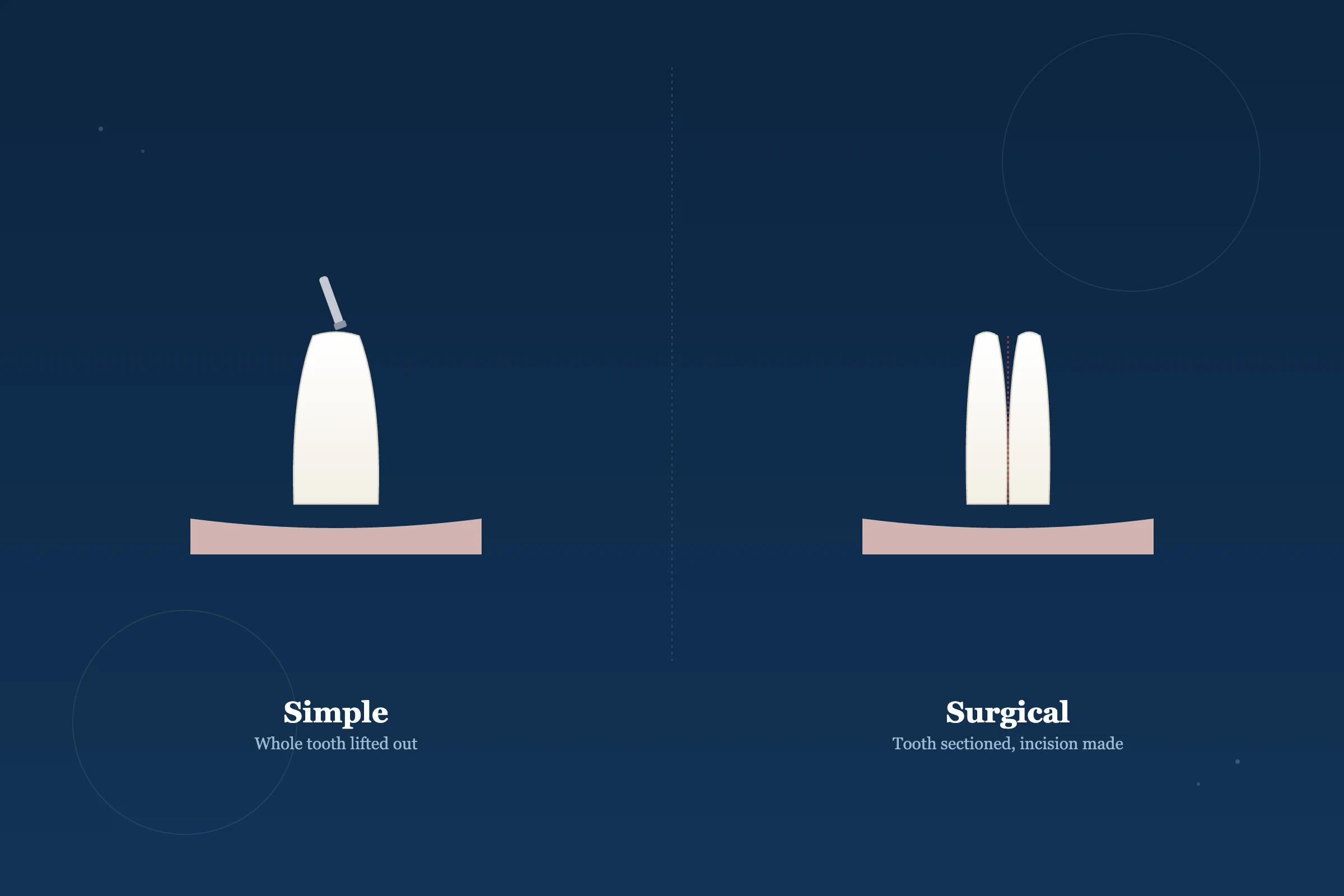
Surgical extraction is used when a tooth can't be removed with a simple lift, because it's broken below the gumline, impacted, or has curved or fused roots, involving a small gum incision and sometimes sectioning the tooth into pieces for safe removal.
At Clarus Dental Specialities in Koregaon Park, surgical tooth extraction is planned and delivered directly by Dr. Neel Bhatavadekar, Pune's only US Board Certified Periodontist and Implantologist.
Patients usually choose this for: a tooth broken below the gumline complex or curved roots on X-ray a tooth that fractured during removal not enough visible structure to grip
By calling or messaging, you agree to share your contact details with Clarus Dental Specialities for this enquiry.
A tooth fractured during an attempted removal elsewhere? Call to confirm.
Quick answer: Surgical tooth extraction is used when a tooth can't be removed with a simple lift and pull, typically because it's broken below the gumline, impacted, or has curved or fused roots visible on X-ray. It involves a small gum incision, and sometimes sectioning the tooth into pieces, to remove it safely. It applies to any tooth, not just wisdom teeth. In Koregaon Park, Pune, surgical extractions are planned from imaging and performed directly by Dr. Neel Bhatavadekar, a US Board Certified Periodontist and Implantologist.
Before You Book
But if you want treatment backed by science and done by a US Board Certified Specialist, you're in the right chair.
02 Overview
Most teeth come out with a simple extraction, loosened and lifted, no incision needed. Surgical extraction is the fallback for the teeth that don't fit that pattern: a tooth broken at or below the gumline with nothing to grip, one with roots that curve or fuse in a way that resists a straight pull, or one that simply won't budge with standard technique.
The surgical approach may involve a small opening in the gum for better access, sectioning the tooth into two or more pieces to remove each safely, and occasionally removing a small amount of surrounding bone.
This isn't only about wisdom teeth, any tooth in the mouth can turn out to need a surgical approach once it's actually examined and X-rayed, a broken molar, a tooth with an unusual root pattern, or one that fractures partway through what started as a simple extraction attempt.
03 Candidacy
This approach applies specifically when a tooth's condition or shape rules out a simple removal.
04 Background
The line between a simple and surgical extraction genuinely isn't always visible before imaging. A tooth that looks fine on the surface can have roots underneath that curve sharply or fuse together, turning what looked routine into a surgical case.
The reverse happens too, a visibly broken or chipped tooth is sometimes still removed with minimal fuss, depending on what's left to work with and how the roots are shaped.
Because of this, an honest answer about which category a tooth falls into is usually only available after the X-ray is reviewed, not promised in advance.
05 Options
The specific technique used depends on what the tooth and imaging call for.
The tooth is divided into two or more pieces, each removed separately, when a single piece would be too difficult to extract whole.
A small opening in the gum tissue provides better access to a tooth that's partially covered or hard to reach.
A small amount of surrounding bone is removed when needed to free the tooth safely.
06 Procedure
Root shape and position are assessed on X-ray to plan the specific surgical approach.
Local anesthesia is used for most cases, with sedation available and discussed where appropriate.
A small opening in the gum provides access where the tooth isn't fully reachable otherwise.
The tooth is divided into pieces or given more room, based on what the case requires.
The tooth is removed in sections or whole, and the site is stitched as needed.
07 Cost Factors
Cost depends on individual case factors and is discussed only after examination, once the following are known:
A specific estimate is only meaningful after a clinical evaluation. This section is informational and is not a quotation.
If a surgical extraction has already been recommended, or a simple extraction attempt has become complicated, Dr. Neel is available to review the imaging and confirm the safest path forward.
08 Aftercare
Swelling and bite pressure with gauze are typical, ice packs help manage initial swelling.
Swelling generally peaks in this window before starting to subside.
Stitches are checked, removed, or left to dissolve as planned.
Soft tissue at the site is generally fully healed.
09 Limits
Being upfront about the trade-offs matters:
10 Your Visit
Your visit includes an examination and imaging to understand the tooth's exact root shape and position, followed by a clear explanation of the specific technique planned, sectioning, soft tissue access, or bone removal, before proceeding.
11 Why This Clinic
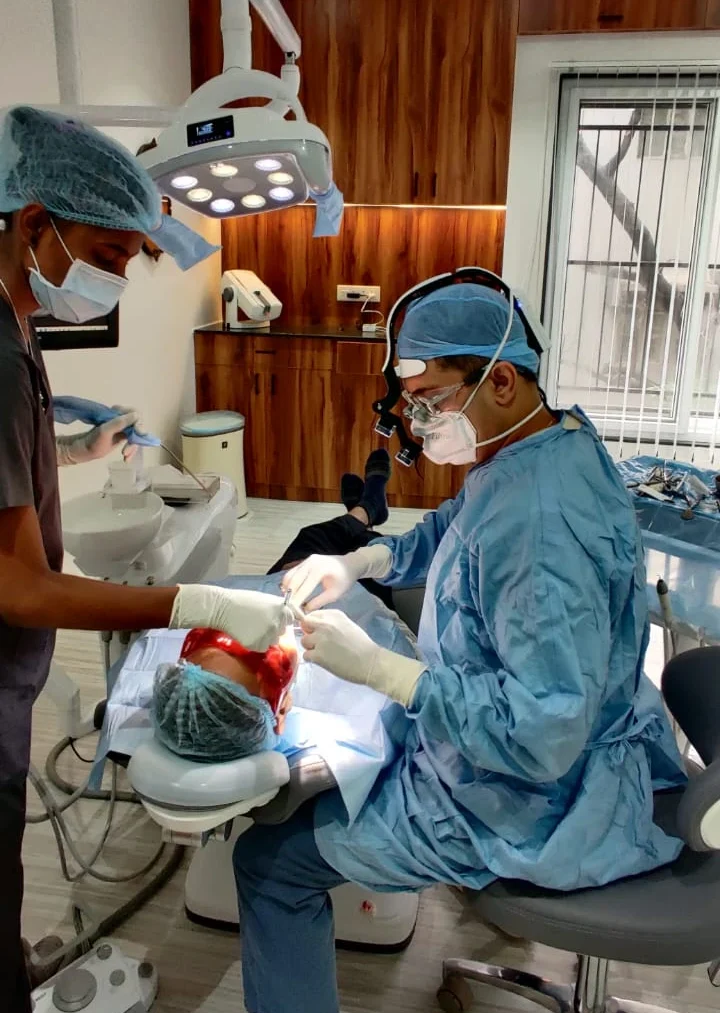
BDS (Nair Hospital Dental College, Mumbai) · Postgraduate periodontology training, University of North Carolina at Chapel Hill, USA · Diplomate, American Board of Periodontology (2008) · ITI Fellow, International Team for Implantology (2009)
When a tooth needs more than a simple lift, minor bone and gum tissue are involved, which is where Dr. Neel's specialty as Pune's only US Board Certified Periodontist and Implantologist, one of only two in India, matters most.
The surgical plan is built from imaging, not discovered mid-procedure.
Minimizing tissue disruption is part of the planning, not an afterthought.
Offered where it genuinely helps, not as a default upsell.
The only dental clinic in Pune listed by the US Consulate Mumbai.
Patients can also read independent reviews on Google and Practo.
12 Visit Us
This dentist and dental clinic in Koregaon Park also treats patients from nearby areas of Pune. See the full Koregaon Park clinic page →
13 International Patients
Clarus Dental Specialities is the only dental clinic in Pune listed by the US Consulate Mumbai, and Dr. Neel holds a dual US-India dental license, giving NRI and overseas patients confidence in the standard of cosmetic dental care available here.
Because surgical extractions typically need a slightly longer initial healing window than simple extractions, it's worth building a few extra days of buffer into travel plans, discussed honestly at your consultation.
14 FAQ
Simple extraction lifts a visible tooth without an incision, surgical extraction is needed when the tooth is impacted, broken below the gumline, or has complex roots, and may involve a small incision or sectioning.
The procedure itself is done under anesthesia, so it's not painful at the time, some added swelling and soreness afterward is typical and manageable.
Most people feel substantially better within a week, with full soft-tissue healing by around two weeks.
Often yes, stitches help the gum tissue heal cleanly after the procedure.
Yes, it's discussed as an option based on the complexity of your case and your comfort.
Yes, any tooth with complex roots, an awkward break, or difficult access can require this approach.
The approach shifts to surgical technique on the spot, this is a normal, manageable adjustment, not a sign anything went wrong.
1. Clinical literature on surgical extraction technique and root morphology, indexed on PubMed Central. ncbi.nlm.nih.gov/pmc
2. Dr. Neel Bhatavadekar's peer-reviewed publications, indexed on PubMed. pubmed.ncbi.nlm.nih.gov
Call or WhatsApp the clinic directly to ask questions or set up a cosmetic dentistry consultation with Dr. Neel Bhatavadekar.
This page provides general dental information and does not constitute a diagnosis, treatment plan, or medical advice. Outcomes vary by individual case. No specific results, costs, or timelines are guaranteed. Please consult Dr. Neel Bhatavadekar or a qualified specialist for advice specific to your condition.