
01 Dental Implants
Dental Implants in Koregaon Park, Pune
✓ Medically reviewed by Dr. Neel Bhatavadekar, Periodontist & Implantologist
Losing a tooth changes how you eat, speak and bite long before it changes how you look. A dental implant replaces the root as well as the crown, so the bone underneath stays supported instead of shrinking away over time.
At Clarus Dental Specialities in Koregaon Park, implant treatment is planned and placed directly by Dr. Neel Bhatavadekar, Pune's only US Board Certified Periodontist and Implantologist, rather than handed to a general dentist as one procedure among many.
Patients usually visit us for: one missing tooth several missing teeth a full arch needing replacement a loose or failing bridge or denture wanting a fixed, non-removable option
By calling or messaging, you agree to share your contact details with Clarus Dental Specialities for this enquiry.
Implant-related pain or a dislodged restoration? Emergency slots may be available the same day, subject to the clinic's schedule. call to confirm.
Quick answer: Dental implants are titanium posts placed into the jawbone to replace a missing tooth root, topped with a crown, bridge or denture once healed. In Koregaon Park, Pune, Clarus Dental Specialities plans and places implants under the direct care of Dr. Neel Bhatavadekar, a US Board Certified Periodontist and Implantologist, meaning the surgical and restorative planning is handled by a specialist, not delegated.
Before You Book
Honestly, We Might Not Be the Right Clinic for You.
- If you don't want treatment based on scientific evidence.
- If you are fine with run of the mill treatments.
- If you are ok with your doctor not being a specialist in his field.
But if you want treatment backed by science and done by a US Board Certified Specialist, you're in the right chair.
02 Overview
Dental Implants in Koregaon Park: An Overview
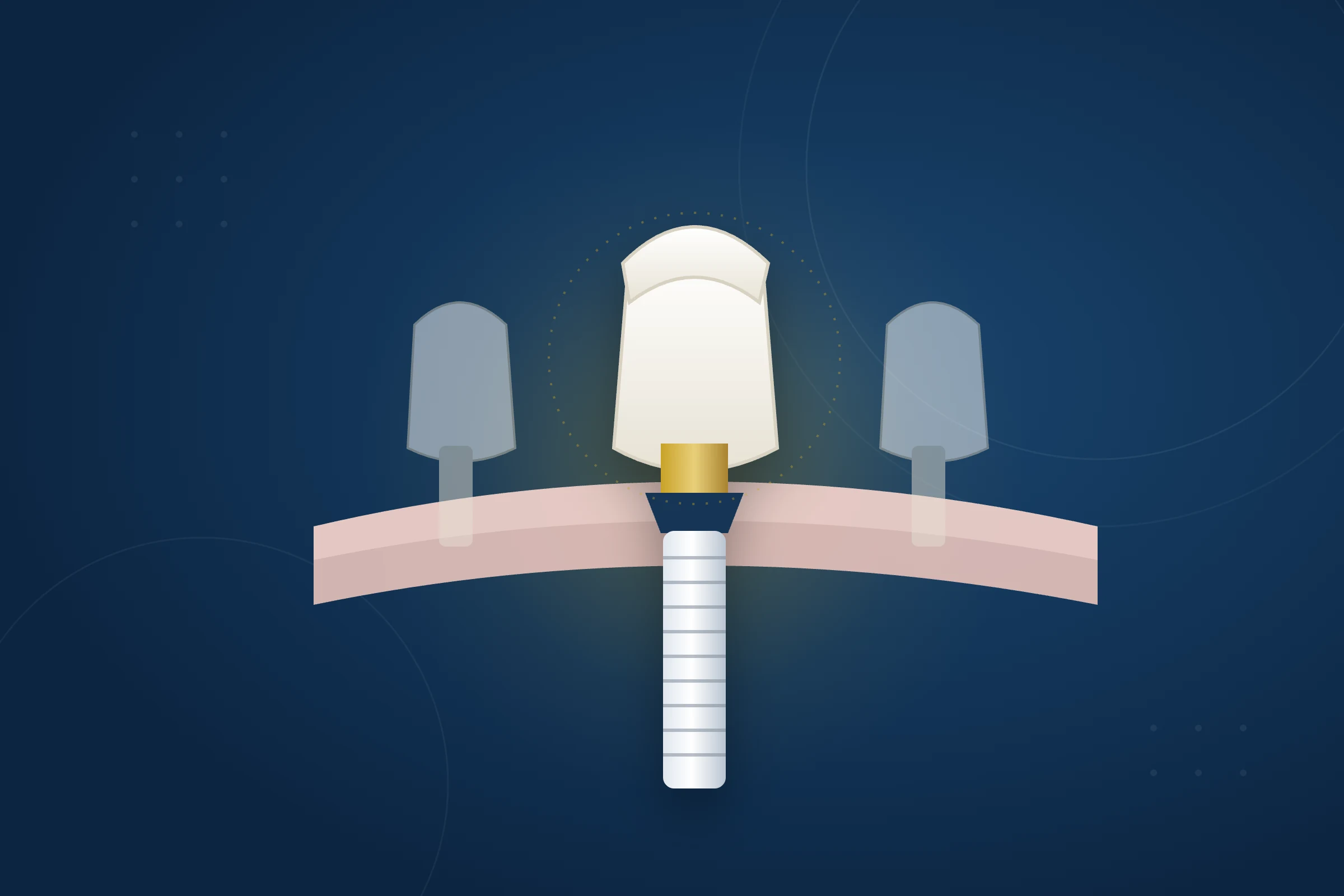
A dental implant is a titanium post placed into the jawbone where a tooth root used to be. Over roughly three to six months, bone grows against the implant surface (a process called osseointegration), anchoring it much like a natural root. A crown, bridge or denture is then attached on top.
This differs from a bridge, which relies on grinding down neighbouring teeth, and from a removable denture, which sits on the gum and can shift while eating or speaking. Because an implant is anchored in bone, it also helps prevent the bone loss that follows tooth loss.
Dr. Neel Bhatavadekar's postgraduate periodontology training at the University of North Carolina at Chapel Hill, USA, together with his ITI Fellowship, is specifically in the tissues implants depend on (bone and gum), which is why implant planning here sits within a periodontal specialty rather than general dentistry.
03 Candidacy
Who Is a Good Candidate for Dental Implants?
Not everyone who has lost a tooth is an immediate candidate. Bone volume, gum health and general medical history all factor into the plan. A short clinical evaluation, usually including imaging, is how this is confirmed.
Common signs it may be worth a consultation: a missing tooth left as a gap, a loose or shifting tooth next to one already missing, a denture or bridge that no longer sits comfortably, or a sunken area of gum where a tooth used to be.
Usually suitable
- Adults missing one or more teeth with adequate jawbone, or bone that can be built up first
- Healthy or well-managed gums, with no active periodontal infection
- Controlled systemic health (e.g. well-managed diabetes)
- Committed to daily oral hygiene and regular follow-up visits
- Looking for a fixed replacement rather than a removable one
Needs closer evaluation first
- Teenagers and young adults whose jaw is still developing
- Uncontrolled diabetes or other unmanaged systemic conditions
- Active gum disease at the implant site
- Significant bone loss without prior grafting
- Heavy smokers, who face measurably higher implant failure rates
04 Background
Why Are Missing Teeth Replaced with Dental Implants?
Teeth are lost to deep decay, advanced gum disease, trauma, or an unsalvageable root fracture. Whatever the cause, the jawbone that held the root begins resorbing (shrinking) once it's gone, which is why a gap left untreated for years often looks more sunken than one treated soon after extraction.
Bridges and dentures replace the visible crown but don't sit inside the bone, so neither stops that loss. An implant does, which is usually the clinical argument for choosing one over the alternatives.
Patients on osteoporosis medication or other bone-modifying drugs should mention this at consultation, since it can affect how implant and extraction sites are planned around the jaw.
05 Options
Dental Implant Options at Clarus Dental Specialities
The right option depends on how many teeth are missing and the condition of the surrounding bone and gum, which is assessed during the initial consultation.
Single Tooth Implant
One implant post supporting one crown, used to replace an individual missing tooth without touching the neighbouring teeth.
- Suits:
- a single gap with adequate bone
- Visits:
- placement, then a review visit for the crown after healing
- Timeline:
- typically 3-6 months including healing
Implant-Supported Bridge
Two or more implants supporting a fixed bridge, used when several adjacent teeth are missing and a removable option isn't preferred.
- Suits:
- multiple adjacent gaps
- Visits:
- placement, healing review, then bridge fitting
- Timeline:
- generally 4-7 months depending on healing
Full-Arch Implants (All-on-4 / All-on-6)
A fixed full-arch prosthesis supported by four to six implants, for patients missing most or all teeth in a jaw.
- Suits:
- extensive tooth loss in one or both jaws
- Visits:
- planning, surgery day, staged fittings
- Timeline:
- a provisional set is often possible sooner; final prosthesis follows full healing
06 Procedure
How the Procedure Works, Step by Step, at Clarus Dental Specialities
Consultation and diagnostic imaging
A clinical exam plus X-rays or a 3D scan, as needed, to assess bone volume, gum condition and nearby nerves and sinuses before anything is planned.
Digital treatment planning
Implant position, angle and size are planned against the imaging; preparatory work such as bone grafting or treating gum disease is scheduled first if needed.
Implant placement
The implant is placed into the jawbone under local anaesthesia. Most single-implant placements are completed in one sitting.
Healing and osseointegration
Bone grows against the implant surface and anchors it, typically over 3 to 4 months in the lower jaw and 6 to 8 months in the upper jaw, with progress checked at follow-up visits.
Crown or prosthesis fitting
Once integration is confirmed, an abutment and the final dental crown, bridge or denture are fitted and the bite adjusted.
07 Cost Factors
What Affects the Cost of Dental Implants in Pune?
Implant cost is case-specific. It depends on the evaluation and complexity of each case, not a fixed rate per tooth. It is discussed only after an examination, once the following are known:
Tends to increase cost
- Bone grafting or sinus lift before placement
- Multiple implants or a full-arch case
- Treating active gum disease first
- Premium implant systems or materials
Tends to reduce cost
- A single implant with adequate existing bone
- No preparatory grafting or gum treatment required
- Healthy gums and controlled general health at the outset
A specific estimate is only meaningful after a clinical evaluation and imaging. This section is informational and is not a quotation.
Considering a Second Opinion on Your Implant Plan?
If you've already been given an implant treatment plan elsewhere, Dr. Neel is available to review the imaging and plan and share an independent clinical view.
08 Aftercare
Recovery and Aftercare at Clarus Dental Specialities
Mild swelling and discomfort are normal. Ice packs, a soft diet and prescribed medication as advised. Avoid vigorous rinsing or spitting.
Gentle brushing resumes around the site, stitches (if placed) are reviewed, and any early concerns are addressed at a check-up.
The osseointegration period. Follow-up visits confirm the implant is stable before the final restoration is fitted.
Routine periodontal maintenance, professional cleanings and avoiding biting very hard objects directly on the implant crown.
09 Limits
When Are Dental Implants Not the Right Choice?
Part of a specialist's job is knowing when an implant isn't the right recommendation. Placement is typically deferred when:
- The jaw is still developing (generally in teenagers and young adults)
- Diabetes or another systemic condition affecting healing is not yet under medical control
- There is active, untreated gum disease at the intended site
- Bone volume is insufficient and grafting has not been evaluated or completed first
- The patient is on bisphosphonates or other bone-modifying medication and has not been medically cleared, since these can affect jaw bone response to surgery
- A patient is an active heavy smoker unwilling to reduce smoking around the healing period, given the documented impact on implant failure rates
10 Your Visit
What to Expect During Your Visit to Clarus Dental Specialities
The first appointment is a consultation, not a same-visit procedure. It includes a review of your dental and medical history, a clinical exam, and imaging if none is already available. Dr. Neel reviews the findings with you directly and explains whether an implant is appropriate, the alternatives, and any preparatory treatment needed first.
Questions are welcome, and asking for a second opinion on a plan from elsewhere is a normal request here.
11 Why This Clinic
Why Patients Choose Clarus Dental Specialities for Dental Implants in Koregaon Park
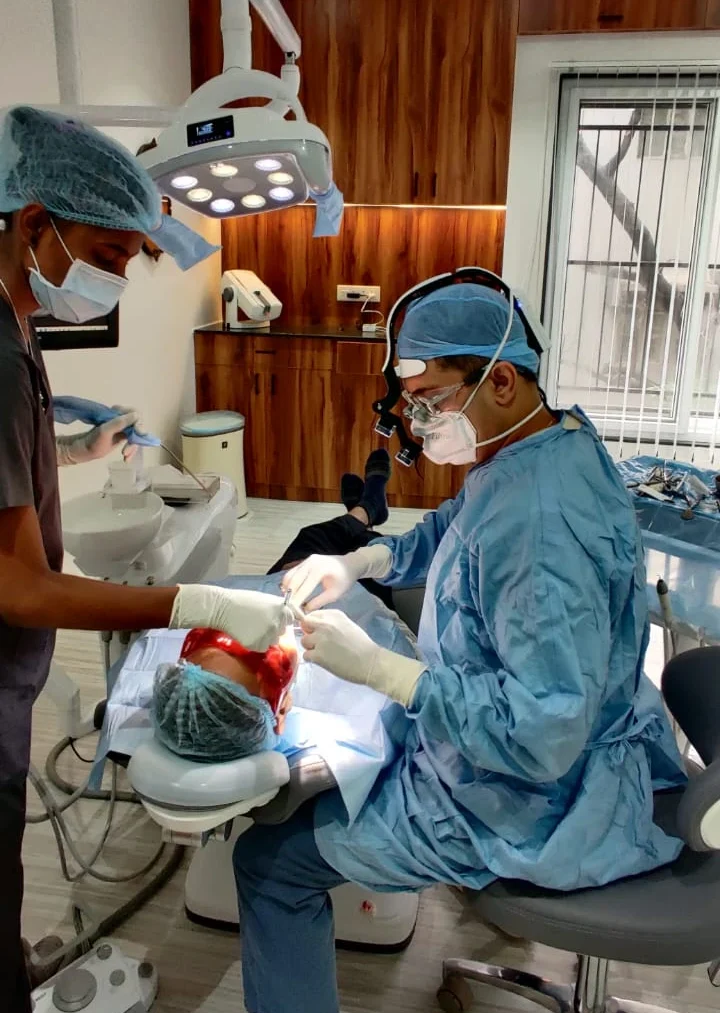
Dr. Neel Bhatavadekar
BDS (Nair Hospital Dental College, Mumbai) · Postgraduate periodontology training, University of North Carolina at Chapel Hill, USA · Diplomate, American Board of Periodontology (2008) · ITI Fellow, International Team for Implantology (2009)
Pune's only US Board Certified Periodontist and Implantologist, and one of only two in India, Dr. Neel has treated periodontal and implant cases for over two decades, including clinical periodontology roles in the United States before founding Clarus Dental Specialities in Pune in 2010.
- Member, Indian Society of Periodontology
- Member, Indian Dental Association
- Member, American Dental Association
- Member, International Team for Implantology (ITI)
Specialist-led, not general dentistry
Implant planning and placement are handled by a periodontist, the specialty trained specifically in gum and bone tissue.
US board certification
The only clinic in Pune with a periodontist holding US Board Certification and ITI Fellow status.
Digital diagnostic planning
Imaging-led planning before any surgical step, rather than working from a visual exam alone.
US Consulate-listed clinic
The only dental clinic in Pune listed by the US Consulate Mumbai, reflecting an external vetting standard beyond routine registration.
Patients can also read independent reviews on Google and Practo.
12 Visit Us
Visiting Our Koregaon Park Dental Clinic
- Clinic
- Clarus Dental Specialities
- Address
- Sunit Anant 1st floor, 102, Lane G, Iricen Railway Colony Lane, S Main Rd, opposite Shahu Modak Udyan, building, opposite Tibetan Cafe, Koregaon Park, Pune, Maharashtra 411001
- Phone
- 097655 72211
- 097655 72211
- Hours
- Monday to Saturday: 9:00 AM to 5:30 PM
Sunday: Closed - Landmarks
- Opposite Shahu Modak Udyan and opposite Tibetan Cafe, on S Main Road in the Iricen Railway Colony Lane / Lane G area of Koregaon Park
- Accessibility
- The clinic is located on the 1st floor. Please call ahead so the team can assist with any specific mobility requirements.
This dentist and dental clinic in Koregaon Park also treats patients from nearby areas of Pune. See the full Koregaon Park clinic page →
13 International Patients
Dental Implants for NRI and International Patients Visiting Pune
Clarus Dental Specialities is the only dental clinic in Pune listed by the US Consulate Mumbai, and Dr. Neel holds a dual US-India dental license, which is why several NRI and overseas patients time implant treatment around a visit to Pune.
Osseointegration takes three to six months regardless of who performs the surgery, so a single-trip treatment usually isn't realistic for a full case. Most international cases are planned across two visits: placement on one trip, final crown or prosthesis on a later one, with English-language records provided for your home-country dentist to monitor in between.
14 FAQ
Frequently Asked Questions About Dental Implants in Koregaon Park
How long does dental implant treatment take from start to finish?
+
For a single implant with adequate bone, total treatment, from placement to final crown, typically spans 3 to 4 months in the lower jaw and 6 to 8 months in the upper jaw, most of which is the body's own healing time. Full-arch cases and cases needing bone grafting take longer.
Is getting a dental implant painful?
+
Placement is done under local anaesthesia, so the procedure itself is not painful. Mild swelling or soreness for a few days afterward is normal and is usually managed with standard pain relief.
What is the success rate of dental implants, and what affects it?
+
Published literature generally places long-term implant survival in the 90 to 95%+ range over ten years when placed and maintained correctly. Individual outcomes are affected by bone quality, oral hygiene, smoking, and how well any underlying gum disease or systemic conditions are managed, which is why these are assessed before treatment.
How is a dental implant different from a bridge or denture?
+
A bridge relies on the neighbouring teeth for support and requires shaping them down. A denture sits on the gum and can move while eating or speaking. An implant is anchored directly in the jawbone, independent of neighbouring teeth, and helps preserve the bone underneath.
Can a dental implant be placed immediately after a tooth extraction?
+
Sometimes. This depends on the condition of the socket, the presence of infection, and bone volume at the site. It is evaluated case by case, and in many cases the site is allowed to heal first before placement.
What happens if I have low jawbone density?
+
Low bone volume doesn't automatically rule out an implant. Bone grafting or a sinus lift can rebuild the site first, adding time to the overall treatment plan, and is assessed at the imaging stage.
How long is recovery after implant surgery?
+
Most people return to normal activity within a few days, with some swelling in the first 48 hours. Full bone healing (osseointegration) takes several months, though it does not typically restrict daily activity during that period.
Do dental implants need special maintenance?
+
Implants are brushed and flossed like natural teeth, alongside routine periodontal check-ups and cleanings. Ongoing gum health around the implant is one of the biggest factors in its long-term survival.
References & Further Reading
1. Long-term clinical studies on dental implant survival and osseointegration success rates, indexed on PubMed Central. ncbi.nlm.nih.gov/pmc
2. Dr. Neel Bhatavadekar's peer-reviewed publications, indexed on PubMed. pubmed.ncbi.nlm.nih.gov
Talk to Dr. Neel About Dental Implants in Koregaon Park, Pune
Call or WhatsApp the clinic directly to ask questions or set up a consultation with Dr. Neel Bhatavadekar.
This page provides general dental information and does not constitute a diagnosis, treatment plan, or medical advice. Outcomes vary by individual case. No specific results, costs, or timelines are guaranteed. Please consult Dr. Neel Bhatavadekar or a qualified specialist for advice specific to your condition.
01 Dental Implants
Dental Implants in Koregaon Park, Pune
✓ Medically reviewed by Dr. Neel Bhatavadekar, Periodontist & Implantologist
Losing a tooth changes how you eat, speak and bite long before it changes how you look. A dental implant replaces the root as well as the crown, so the bone underneath stays supported instead of shrinking away over time.
At Clarus Dental Specialities in Koregaon Park, implant treatment is planned and placed directly by Dr. Neel Bhatavadekar, Pune's only US Board Certified Periodontist and Implantologist, rather than handed to a general dentist as one procedure among many.
Patients usually visit us for: one missing tooth several missing teeth a full arch needing replacement a loose or failing bridge or denture wanting a fixed, non-removable option
By calling or messaging, you agree to share your contact details with Clarus Dental Specialities for this enquiry.
Implant-related pain or a dislodged restoration? Emergency slots may be available the same day, subject to the clinic's schedule. call to confirm.
Quick answer: Dental implants are titanium posts placed into the jawbone to replace a missing tooth root, topped with a crown, bridge or denture once healed. In Koregaon Park, Pune, Clarus Dental Specialities plans and places implants under the direct care of Dr. Neel Bhatavadekar, a US Board Certified Periodontist and Implantologist, meaning the surgical and restorative planning is handled by a specialist, not delegated.
Before You Book
Honestly, We Might Not Be the Right Clinic for You.
- If you don't want treatment based on scientific evidence.
- If you are fine with run of the mill treatments.
- If you are ok with your doctor not being a specialist in his field.
But if you want treatment backed by science and done by a US Board Certified Specialist, you're in the right chair.
02 Overview
Dental Implants in Koregaon Park: An Overview
A dental implant is a titanium post placed into the jawbone where a tooth root used to be. Over roughly three to six months, bone grows against the implant surface (a process called osseointegration), anchoring it much like a natural root. A crown, bridge or denture is then attached on top.
This differs from a bridge, which relies on grinding down neighbouring teeth, and from a removable denture, which sits on the gum and can shift while eating or speaking. Because an implant is anchored in bone, it also helps prevent the bone loss that follows tooth loss.
Dr. Neel Bhatavadekar's postgraduate periodontology training at the University of North Carolina at Chapel Hill, USA, together with his ITI Fellowship, is specifically in the tissues implants depend on (bone and gum), which is why implant planning here sits within a periodontal specialty rather than general dentistry.
03 Candidacy
Who Is a Good Candidate for Dental Implants?
Not everyone who has lost a tooth is an immediate candidate. Bone volume, gum health and general medical history all factor into the plan. A short clinical evaluation, usually including imaging, is how this is confirmed.
Common signs it may be worth a consultation: a missing tooth left as a gap, a loose or shifting tooth next to one already missing, a denture or bridge that no longer sits comfortably, or a sunken area of gum where a tooth used to be.
Usually suitable
- Adults missing one or more teeth with adequate jawbone, or bone that can be built up first
- Healthy or well-managed gums, with no active periodontal infection
- Controlled systemic health (e.g. well-managed diabetes)
- Committed to daily oral hygiene and regular follow-up visits
- Looking for a fixed replacement rather than a removable one
Needs closer evaluation first
- Teenagers and young adults whose jaw is still developing
- Uncontrolled diabetes or other unmanaged systemic conditions
- Active gum disease at the implant site
- Significant bone loss without prior grafting
- Heavy smokers, who face measurably higher implant failure rates
04 Background
Why Are Missing Teeth Replaced with Dental Implants?
Teeth are lost to deep decay, advanced gum disease, trauma, or an unsalvageable root fracture. Whatever the cause, the jawbone that held the root begins resorbing (shrinking) once it's gone, which is why a gap left untreated for years often looks more sunken than one treated soon after extraction.
Bridges and dentures replace the visible crown but don't sit inside the bone, so neither stops that loss. An implant does, which is usually the clinical argument for choosing one over the alternatives.
Patients on osteoporosis medication or other bone-modifying drugs should mention this at consultation, since it can affect how implant and extraction sites are planned around the jaw.
05 Options
Dental Implant Options at Clarus Dental Specialities
The right option depends on how many teeth are missing and the condition of the surrounding bone and gum, which is assessed during the initial consultation.
Single Tooth Implant
One implant post supporting one crown, used to replace an individual missing tooth without touching the neighbouring teeth.
- Suits:
- a single gap with adequate bone
- Visits:
- placement, then a review visit for the crown after healing
- Timeline:
- typically 3-6 months including healing
Implant-Supported Bridge
Two or more implants supporting a fixed bridge, used when several adjacent teeth are missing and a removable option isn't preferred.
- Suits:
- multiple adjacent gaps
- Visits:
- placement, healing review, then bridge fitting
- Timeline:
- generally 4-7 months depending on healing
Full-Arch Implants (All-on-4 / All-on-6)
A fixed full-arch prosthesis supported by four to six implants, for patients missing most or all teeth in a jaw.
- Suits:
- extensive tooth loss in one or both jaws
- Visits:
- planning, surgery day, staged fittings
- Timeline:
- a provisional set is often possible sooner; final prosthesis follows full healing
06 Procedure
How the Procedure Works, Step by Step, at Clarus Dental Specialities
Consultation and diagnostic imaging
A clinical exam plus X-rays or a 3D scan, as needed, to assess bone volume, gum condition and nearby nerves and sinuses before anything is planned.
Digital treatment planning
Implant position, angle and size are planned against the imaging; preparatory work such as bone grafting or treating gum disease is scheduled first if needed.
Implant placement
The implant is placed into the jawbone under local anaesthesia. Most single-implant placements are completed in one sitting.
Healing and osseointegration
Bone grows against the implant surface and anchors it, typically over 3 to 4 months in the lower jaw and 6 to 8 months in the upper jaw, with progress checked at follow-up visits.
Crown or prosthesis fitting
Once integration is confirmed, an abutment and the final dental crown, bridge or denture are fitted and the bite adjusted.
07 Cost Factors
What Affects the Cost of Dental Implants in Pune?
Implant cost is case-specific. It depends on the evaluation and complexity of each case, not a fixed rate per tooth. It is discussed only after an examination, once the following are known:
Tends to increase cost
- Bone grafting or sinus lift before placement
- Multiple implants or a full-arch case
- Treating active gum disease first
- Premium implant systems or materials
Tends to reduce cost
- A single implant with adequate existing bone
- No preparatory grafting or gum treatment required
- Healthy gums and controlled general health at the outset
A specific estimate is only meaningful after a clinical evaluation and imaging. This section is informational and is not a quotation.
Considering a Second Opinion on Your Implant Plan?
If you've already been given an implant treatment plan elsewhere, Dr. Neel is available to review the imaging and plan and share an independent clinical view.
08 Aftercare
Recovery and Aftercare at Clarus Dental Specialities
Mild swelling and discomfort are normal. Ice packs, a soft diet and prescribed medication as advised. Avoid vigorous rinsing or spitting.
Gentle brushing resumes around the site, stitches (if placed) are reviewed, and any early concerns are addressed at a check-up.
The osseointegration period. Follow-up visits confirm the implant is stable before the final restoration is fitted.
Routine periodontal maintenance, professional cleanings and avoiding biting very hard objects directly on the implant crown.
09 Limits
When Are Dental Implants Not the Right Choice?
Part of a specialist's job is knowing when an implant isn't the right recommendation. Placement is typically deferred when:
- The jaw is still developing (generally in teenagers and young adults)
- Diabetes or another systemic condition affecting healing is not yet under medical control
- There is active, untreated gum disease at the intended site
- Bone volume is insufficient and grafting has not been evaluated or completed first
- The patient is on bisphosphonates or other bone-modifying medication and has not been medically cleared, since these can affect jaw bone response to surgery
- A patient is an active heavy smoker unwilling to reduce smoking around the healing period, given the documented impact on implant failure rates
10 Your Visit
What to Expect During Your Visit to Clarus Dental Specialities
The first appointment is a consultation, not a same-visit procedure. It includes a review of your dental and medical history, a clinical exam, and imaging if none is already available. Dr. Neel reviews the findings with you directly and explains whether an implant is appropriate, the alternatives, and any preparatory treatment needed first.
Questions are welcome, and asking for a second opinion on a plan from elsewhere is a normal request here.
11 Why This Clinic
Why Patients Choose Clarus Dental Specialities for Dental Implants in Koregaon Park
Dr. Neel Bhatavadekar
BDS (Nair Hospital Dental College, Mumbai) · Postgraduate periodontology training, University of North Carolina at Chapel Hill, USA · Diplomate, American Board of Periodontology (2008) · ITI Fellow, International Team for Implantology (2009)
Pune's only US Board Certified Periodontist and Implantologist, and one of only two in India, Dr. Neel has treated periodontal and implant cases for over two decades, including clinical periodontology roles in the United States before founding Clarus Dental Specialities in Pune in 2010.
- Member, Indian Society of Periodontology
- Member, Indian Dental Association
- Member, American Dental Association
- Member, International Team for Implantology (ITI)
Specialist-led, not general dentistry
Implant planning and placement are handled by a periodontist, the specialty trained specifically in gum and bone tissue.
US board certification
The only clinic in Pune with a periodontist holding US Board Certification and ITI Fellow status.
Digital diagnostic planning
Imaging-led planning before any surgical step, rather than working from a visual exam alone.
US Consulate-listed clinic
The only dental clinic in Pune listed by the US Consulate Mumbai, reflecting an external vetting standard beyond routine registration.
Patients can also read independent reviews on Google and Practo.
12 Visit Us
Visiting Our Koregaon Park Dental Clinic
- Clinic
- Clarus Dental Specialities
- Address
- Sunit Anant 1st floor, 102, Lane G, Iricen Railway Colony Lane, S Main Rd, opposite Shahu Modak Udyan, building, opposite Tibetan Cafe, Koregaon Park, Pune, Maharashtra 411001
- Phone
- 097655 72211
- 097655 72211
- Hours
- Monday to Saturday: 9:00 AM to 5:30 PM
Sunday: Closed - Landmarks
- Opposite Shahu Modak Udyan and opposite Tibetan Cafe, on S Main Road in the Iricen Railway Colony Lane / Lane G area of Koregaon Park
- Accessibility
- The clinic is located on the 1st floor. Please call ahead so the team can assist with any specific mobility requirements.
This dentist and dental clinic in Koregaon Park also treats patients from nearby areas of Pune. See the full Koregaon Park clinic page →
13 International Patients
Dental Implants for NRI and International Patients Visiting Pune
Clarus Dental Specialities is the only dental clinic in Pune listed by the US Consulate Mumbai, and Dr. Neel holds a dual US-India dental license, which is why several NRI and overseas patients time implant treatment around a visit to Pune.
Osseointegration takes three to six months regardless of who performs the surgery, so a single-trip treatment usually isn't realistic for a full case. Most international cases are planned across two visits: placement on one trip, final crown or prosthesis on a later one, with English-language records provided for your home-country dentist to monitor in between.
14 FAQ
Frequently Asked Questions About Dental Implants in Koregaon Park
How long does dental implant treatment take from start to finish?
+
For a single implant with adequate bone, total treatment, from placement to final crown, typically spans 3 to 4 months in the lower jaw and 6 to 8 months in the upper jaw, most of which is the body's own healing time. Full-arch cases and cases needing bone grafting take longer.
Is getting a dental implant painful?
+
Placement is done under local anaesthesia, so the procedure itself is not painful. Mild swelling or soreness for a few days afterward is normal and is usually managed with standard pain relief.
What is the success rate of dental implants, and what affects it?
+
Published literature generally places long-term implant survival in the 90 to 95%+ range over ten years when placed and maintained correctly. Individual outcomes are affected by bone quality, oral hygiene, smoking, and how well any underlying gum disease or systemic conditions are managed, which is why these are assessed before treatment.
How is a dental implant different from a bridge or denture?
+
A bridge relies on the neighbouring teeth for support and requires shaping them down. A denture sits on the gum and can move while eating or speaking. An implant is anchored directly in the jawbone, independent of neighbouring teeth, and helps preserve the bone underneath.
Can a dental implant be placed immediately after a tooth extraction?
+
Sometimes. This depends on the condition of the socket, the presence of infection, and bone volume at the site. It is evaluated case by case, and in many cases the site is allowed to heal first before placement.
What happens if I have low jawbone density?
+
Low bone volume doesn't automatically rule out an implant. Bone grafting or a sinus lift can rebuild the site first, adding time to the overall treatment plan, and is assessed at the imaging stage.
How long is recovery after implant surgery?
+
Most people return to normal activity within a few days, with some swelling in the first 48 hours. Full bone healing (osseointegration) takes several months, though it does not typically restrict daily activity during that period.
Do dental implants need special maintenance?
+
Implants are brushed and flossed like natural teeth, alongside routine periodontal check-ups and cleanings. Ongoing gum health around the implant is one of the biggest factors in its long-term survival.
References & Further Reading
1. Long-term clinical studies on dental implant survival and osseointegration success rates, indexed on PubMed Central. ncbi.nlm.nih.gov/pmc
2. Dr. Neel Bhatavadekar's peer-reviewed publications, indexed on PubMed. pubmed.ncbi.nlm.nih.gov
Talk to Dr. Neel About Dental Implants in Koregaon Park, Pune
Call or WhatsApp the clinic directly to ask questions or set up a consultation with Dr. Neel Bhatavadekar.
This page provides general dental information and does not constitute a diagnosis, treatment plan, or medical advice. Outcomes vary by individual case. No specific results, costs, or timelines are guaranteed. Please consult Dr. Neel Bhatavadekar or a qualified specialist for advice specific to your condition.