
01 Root Canal Treatment
✓ Medically reviewed by Dr. Neel Bhatavadekar, Periodontist & Implantologist
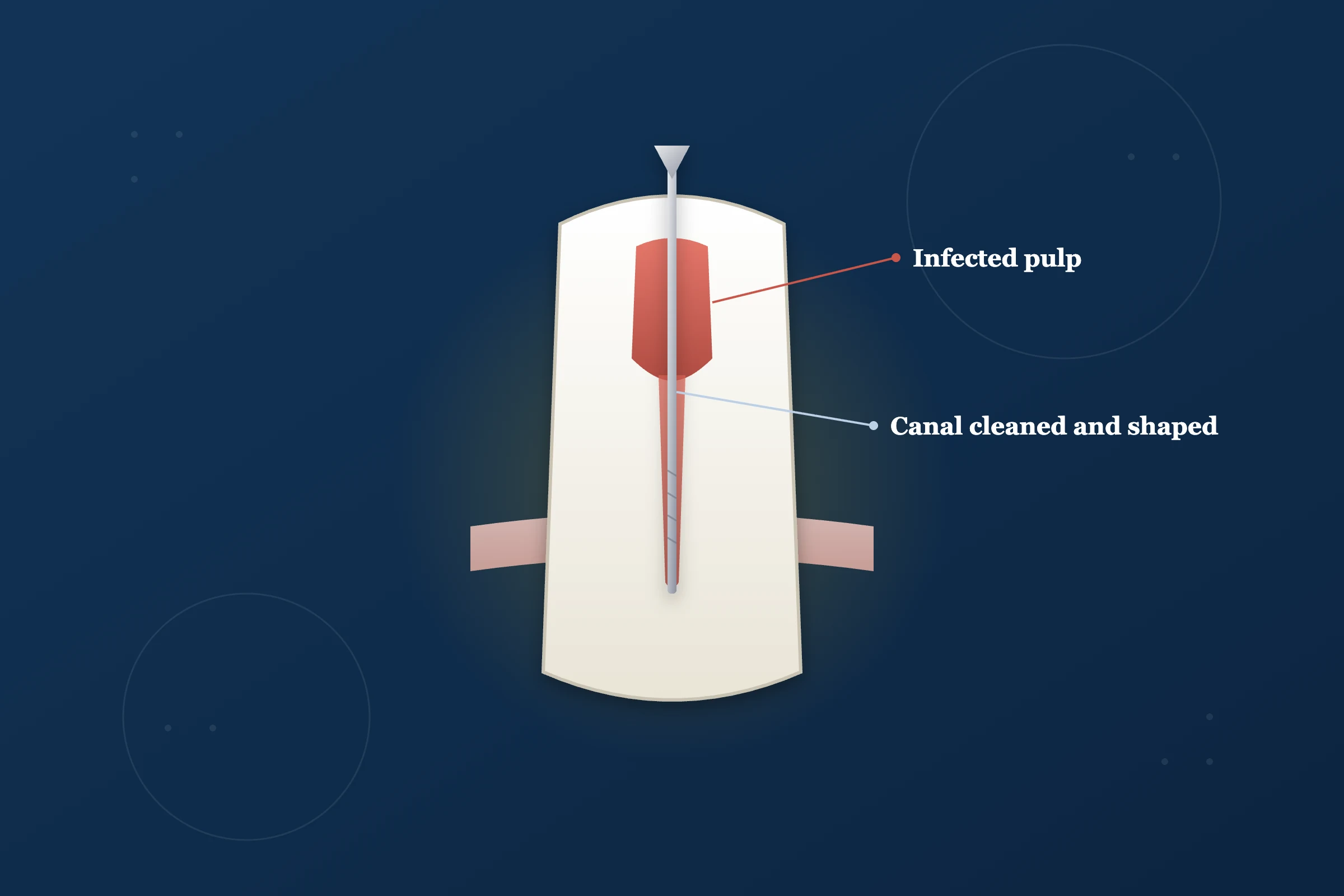
Root canal treatment removes infected or inflamed pulp from inside a tooth, cleans and seals the canal, and saves the natural tooth that would otherwise need to be extracted.
At Clarus Dental Specialities in Koregaon Park, root canal treatment is performed directly by Dr. Neel Bhatavadekar, Pune's only US Board Certified Periodontist and Implantologist.
Patients usually visit us for: lingering pain to hot or cold pain when biting or chewing swelling near a tooth a tooth that has darkened
By calling or messaging, you agree to share your contact details with Clarus Dental Specialities for this enquiry.
Severe tooth pain or swelling right now? Emergency slots may be available the same day, subject to the clinic's schedule. Call to confirm.
Quick answer: Root canal treatment removes infected or inflamed pulp, the nerve and blood vessel tissue inside a tooth, then cleans, shapes, and seals the canal to save the natural tooth. It's typically recommended instead of extraction whenever the remaining tooth structure can support it. In Koregaon Park, Pune, root canal treatment is performed by Dr. Neel Bhatavadekar, a US Board Certified Periodontist and Implantologist.
Before You Book
But if you want treatment backed by science and done by a US Board Certified Specialist, you're in the right chair.
02 Overview
Inside every tooth is a soft tissue called pulp, containing nerves and blood vessels, that runs from the crown down through the root canal. Deep decay, a crack, repeated dental procedures on the same tooth, or trauma can cause this pulp to become infected or inflamed.
Once that happens, the pulp generally can't heal on its own. Root canal treatment removes it, along with the infection, then cleans and shapes the empty canal before sealing it. The goal is to remove the source of infection while keeping the tooth itself in place.
This is different from extraction, where the whole tooth is removed. Root canal treatment is usually the preferred option whenever enough healthy tooth structure remains to support it.
03 Candidacy
Whether root canal treatment is right for a tooth depends on how much healthy structure remains once the infection is addressed.
04 Background
It's a common assumption that severe tooth pain means the tooth has to come out. In most cases, that's not necessary. Once the infected pulp is removed and the canal cleaned and sealed, the remaining tooth structure functions normally, especially once protected with a crown where needed.
Root canal treatment today is performed under local anaesthesia, and the discomfort during the procedure is generally comparable to having a filling placed. The pain patients are trying to escape is caused by the infection itself, not the treatment for it.
05 Options
How treatment is staged depends on the tooth's canal anatomy and how extensive the infection is.
Teeth with accessible, uncomplicated canal anatomy can often be fully treated in one visit.
More complex canal anatomy or a larger infection may need medication placed between visits before final sealing.
A crown is often placed afterward, particularly on back teeth, to protect the treated tooth from fracture under normal biting force.
06 Procedure
An X-ray confirms the diagnosis and shows the tooth's canal anatomy and the extent of any infection.
The tooth and surrounding area are numbed so the procedure is comfortable throughout.
An opening is made to reach and remove the infected or inflamed pulp tissue.
The canal system is thoroughly cleaned, shaped, and disinfected to remove remaining bacteria.
The canal is filled and sealed, with a filling or temporary restoration placed to protect the tooth until any planned crown is fitted.
07 Cost Factors
Cost depends on the tooth being treated and how complex the case is. It's discussed only after examination and X-ray, once the following are known:
A specific estimate is only meaningful after a clinical evaluation. This section is informational and is not a quotation.
If extraction or root canal treatment has already been recommended elsewhere, Dr. Neel is available to review your case and share an independent assessment.
08 Aftercare
Mild soreness or tenderness around the treated tooth is normal and settles within a day or two.
Avoiding chewing on that side until the permanent restoration is placed helps protect the tooth.
A follow-up visit for crown placement, if planned, is usually scheduled within this window.
Once restored, the tooth functions normally alongside routine dental check-ups.
09 Limits
Being clear about the limits of treatment matters, particularly for more compromised teeth:
10 Your Visit
The first appointment includes an examination and X-ray to confirm the diagnosis and assess the tooth's canal anatomy. Treatment can often begin the same visit, with a clear explanation of what was found and what to expect next.
11 Why This Clinic
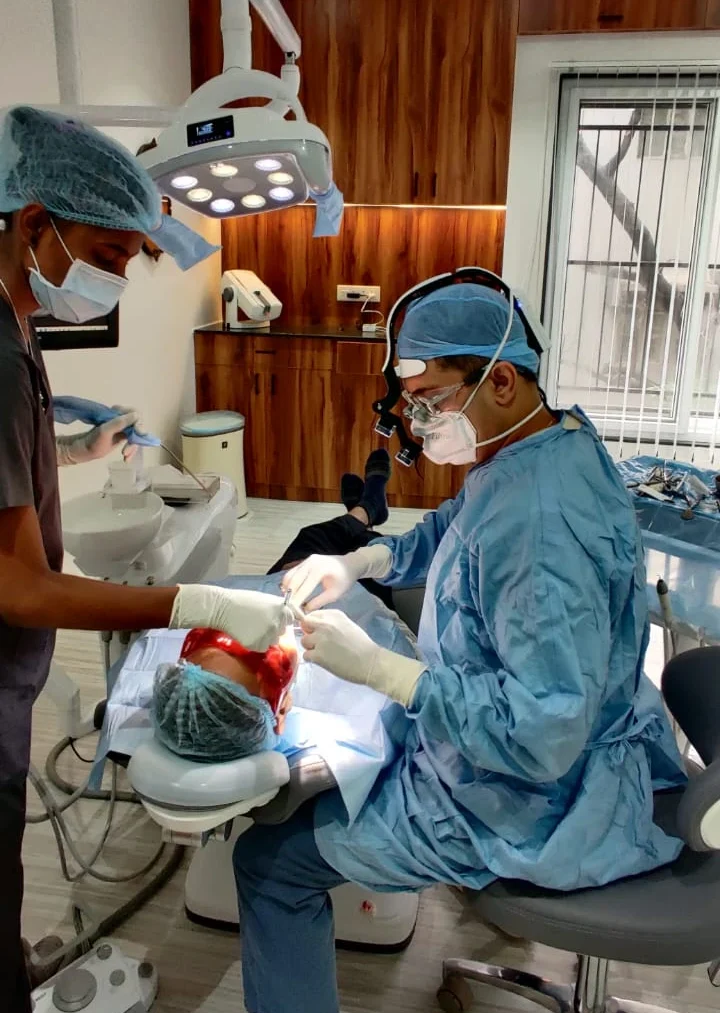
BDS (Nair Hospital Dental College, Mumbai) · Postgraduate periodontology training, University of North Carolina at Chapel Hill, USA · Diplomate, American Board of Periodontology (2008) · ITI Fellow, International Team for Implantology (2009)
Treating and saving compromised teeth has been a consistent thread across Dr. Neel's more than two decades of clinical experience as Pune's only US Board Certified Periodontist and Implantologist, one of only two in India.
Extraction is considered only once saving the tooth genuinely isn't realistic.
Gum and bone support around the tooth are assessed too, not just the canal.
Diagnosis and treatment often begin together, so pain isn't left unaddressed.
The only dental clinic in Pune listed by the US Consulate Mumbai.
Patients can also read independent reviews on Google and Practo.
12 Visit Us
This dentist and dental clinic in Koregaon Park also treats patients from nearby areas of Pune. See the full Koregaon Park clinic page →
13 International Patients
Clarus Dental Specialities is the only dental clinic in Pune listed by the US Consulate Mumbai, and Dr. Neel holds a dual US-India dental license, giving NRI and overseas patients confidence in the standard of care available here.
Many cases can be completed within a single visit, and even multi-visit treatment is usually finished within a normal trip window, making this a manageable treatment to have done during a visit to Pune.
14 FAQ
The procedure is performed under local anaesthesia, so it isn't painful. Discomfort during treatment is generally comparable to having a filling placed. The infection itself is usually what causes the pain beforehand.
It depends on the tooth's canal anatomy and the extent of infection. Straightforward cases are often completed in a single visit, while more complex cases may need two.
Often yes, particularly for back teeth, since root canal treatment can leave a tooth more brittle. A crown protects it from fracture under normal biting force.
The infection can spread, leading to worsening pain, swelling, and potentially an abscess, and the tooth may eventually need to be extracted rather than saved.
With a proper restoration, such as a crown where needed, and good oral hygiene, a root canal treated tooth commonly lasts many years, often a lifetime.
In rare cases, infection can persist or return, sometimes due to complex canal anatomy that wasn't fully treated. Retreatment is often still possible in these cases.
A root canal removes the infected tissue inside the tooth while keeping the tooth itself. An extraction removes the entire tooth, which then needs to be replaced, for example with an implant or bridge, to restore function.
1. Clinical literature on root canal treatment outcomes and success rates, indexed on PubMed Central. ncbi.nlm.nih.gov/pmc
2. Dr. Neel Bhatavadekar's peer-reviewed publications, indexed on PubMed. pubmed.ncbi.nlm.nih.gov
Call or WhatsApp the clinic directly to ask questions or set up a consultation with Dr. Neel Bhatavadekar.
This page provides general dental information and does not constitute a diagnosis, treatment plan, or medical advice. Outcomes vary by individual case. No specific results, costs, or timelines are guaranteed. Please consult Dr. Neel Bhatavadekar or a qualified specialist for advice specific to your condition.