
01 Single Tooth Implant
✓ Medically reviewed by Dr. Neel Bhatavadekar, Periodontist & Implantologist
One missing tooth is enough to change how you chew on that side, how neighbouring teeth start to drift, and in visible areas, how confident you feel smiling. A single tooth implant replaces just that one root, without touching the healthy teeth on either side of the gap.
At Clarus Dental Specialities in Koregaon Park, single tooth implants are planned and placed directly by Dr. Neel Bhatavadekar, Pune's only US Board Certified Periodontist and Implantologist.
Patients usually visit us for: one tooth lost to an accident a tooth removed for decay a gap since childhood not wanting neighbouring teeth ground down for a bridge a visible front tooth gap
By calling or messaging, you agree to share your contact details with Clarus Dental Specialities for this enquiry.
Lost a tooth suddenly, or a temporary restoration has come loose? Emergency slots may be available the same day, subject to the clinic's schedule. Call to confirm.
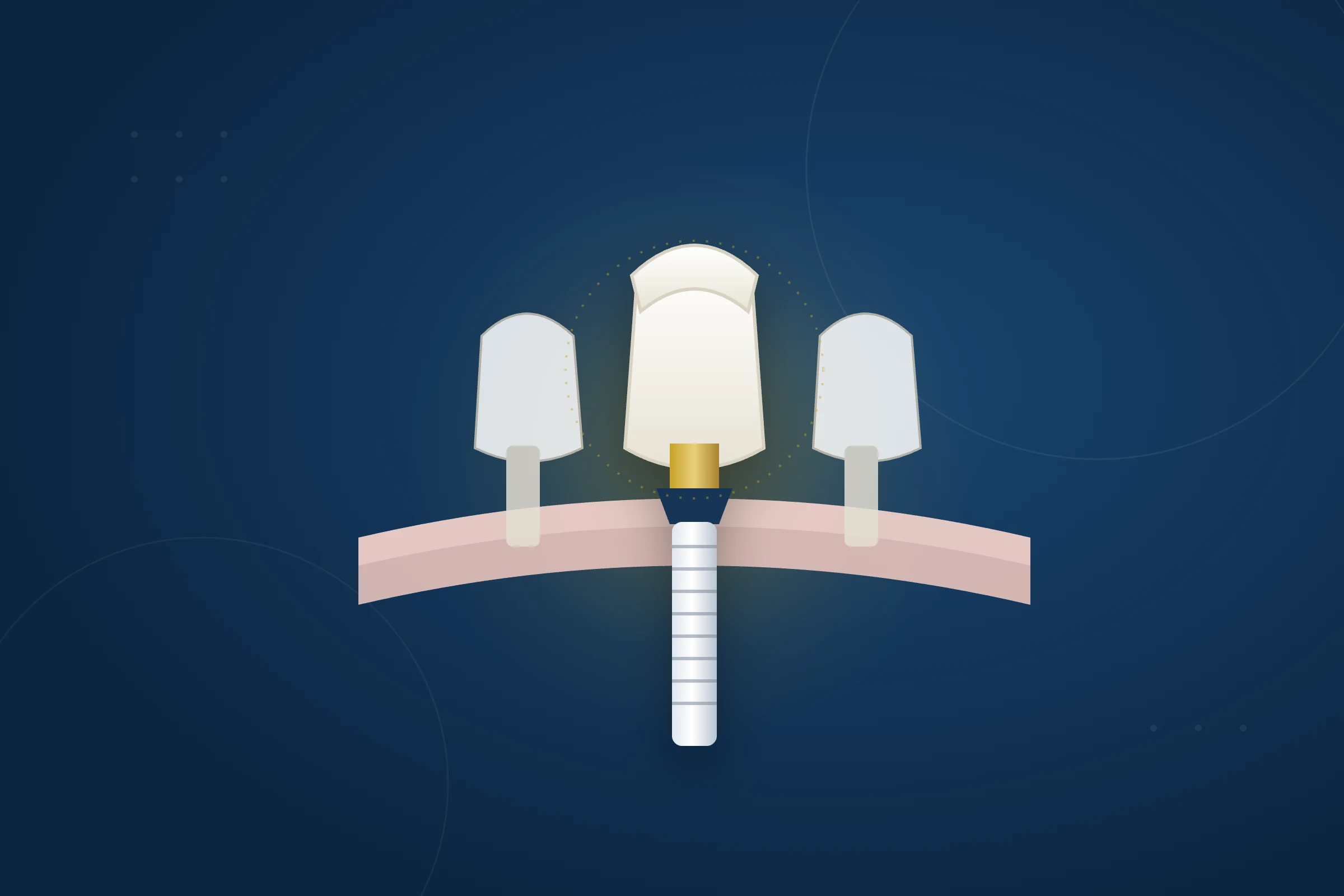
Quick answer: A single tooth implant is a titanium post placed into the jawbone at the site of one missing tooth, topped with a single crown once healed. In Koregaon Park, Pune, Clarus Dental Specialities plans and places single tooth implants under the direct care of Dr. Neel Bhatavadekar, a US Board Certified Periodontist and Implantologist, without preparing or shaping the teeth next to the gap.
Before You Book
But if you want treatment backed by science and done by a US Board Certified Specialist, you're in the right chair.
02 Overview
A single tooth implant replaces one missing tooth root with a titanium post, anchored directly in the jawbone at that site. Once the bone has integrated with the implant, a single crown is fitted on top, matched in shape and shade to sit naturally among the surrounding teeth.
The key difference from a bridge is that a bridge spans the gap by attaching to the two teeth next to it, which usually means shaving down healthy enamel on both. A single tooth implant is self-supporting: the two neighbouring teeth are not touched, prepared, or loaded at all.
Because only one site is involved, planning is precise rather than broad. Dr. Neel Bhatavadekar's periodontology training, focused specifically on the bone and gum tissue a single implant depends on, is what determines whether that one site has enough width, height and gum quality to support a result that looks and functions like the tooth it's replacing.
03 Candidacy
Suitability comes down to the condition of that one site: how much bone remains, how healthy the surrounding gum is, and how long ago the tooth was lost. A clinical exam and imaging of that specific area confirms it.
04 Background
Once a tooth is gone, the jawbone that held its root starts to resorb at that exact site, usually most noticeably in the first year. A bridge or a removable partial denture replaces the visible crown but does nothing to load that bone, so the resorption continues underneath a restoration that looks fine from the outside.
A single tooth implant is the only common option that sits inside the bone at that site, the way the natural root did. This is also why timing matters: a site treated within a reasonable window after loss generally has more bone to work with than one left empty for years.
For a single visible tooth, especially in the front of the mouth, the surrounding gum shape is also part of the outcome, which is why gum and bone assessment, not just the crown itself, is central to planning a single implant properly.
05 Options
For a single missing tooth, the main decision is timing: whether the implant is placed immediately, or after the site has healed. This is assessed at the initial consultation.
The implant is placed in the same visit as the extraction, when the socket and surrounding bone are in good condition.
The site is allowed to heal for a period after extraction before the implant is placed, which is the more conservative, most frequently used approach.
Bone grafting material is placed at the time of extraction to preserve the site's width and height before the implant is placed later.
06 Procedure
The specific site is examined with imaging to assess bone width and height, and to plan the exact implant position relative to the neighbouring teeth.
If the tooth hasn't already been lost, it's removed first, with immediate or delayed implant placement planned based on the site's condition.
The titanium post is placed into the jawbone under local anaesthesia, positioned to align with the bite and the neighbouring teeth.
Bone grows against the implant surface, typically over 3 to 4 months in the lower jaw and 6 to 8 months in the upper jaw.
Once integration is confirmed, a single crown is fabricated and fitted, with its shape, size and shade matched to sit naturally beside the neighbouring teeth.
07 Cost Factors
Cost for a single tooth implant is case-specific, depending on the condition of that one site. It's discussed only after an examination, once the following are known:
A specific estimate is only meaningful after a clinical evaluation and imaging of the site. This section is informational and is not a quotation.
If you've already been given a treatment plan for a single missing tooth elsewhere, Dr. Neel is available to review the imaging and share an independent clinical view.
08 Aftercare
Mild swelling and discomfort at the single site are normal. Ice packs, a soft diet and prescribed medication as advised.
Gentle brushing resumes around the site, stitches (if placed) are reviewed at a check-up.
The osseointegration period. Follow-up visits confirm the implant is stable before the crown is fitted.
The implant is cleaned like a natural tooth, with routine periodontal check-ups and cleanings.
09 Limits
Placement at a single site is typically deferred or reconsidered when:
10 Your Visit
The first appointment is a consultation focused on that one site. It typically includes a review of your dental and medical history, a clinical exam, and imaging of the gap if none is already available. Dr. Neel reviews the findings with you directly and explains whether immediate or delayed placement fits your case, and what it would involve.
11 Why This Clinic
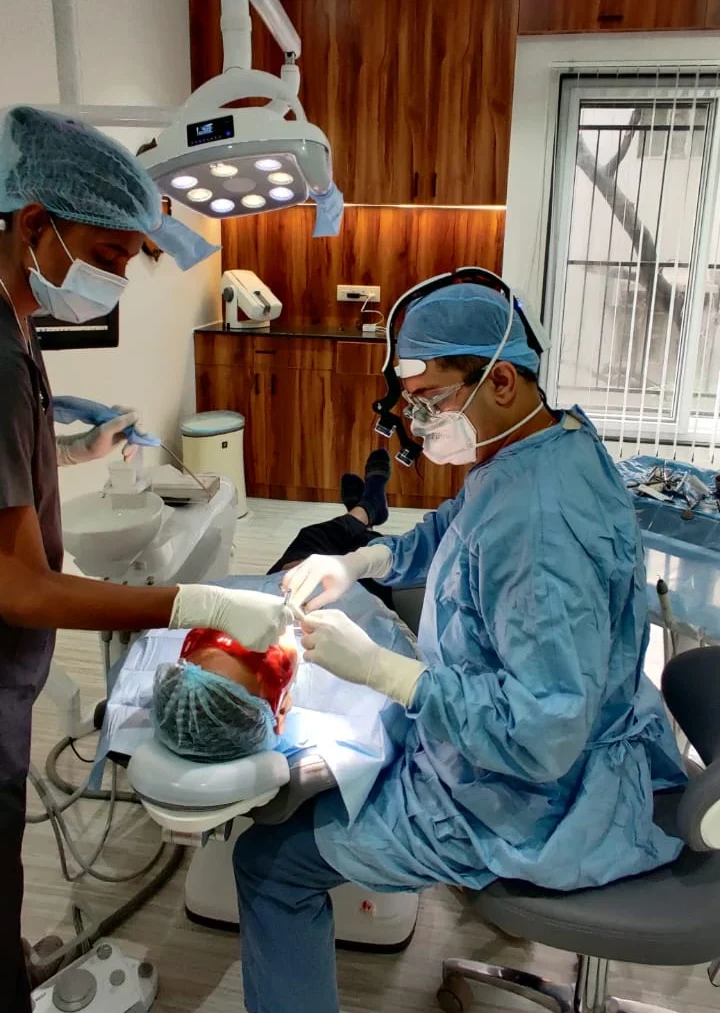
BDS (Nair Hospital Dental College, Mumbai) · Postgraduate periodontology training, University of North Carolina at Chapel Hill, USA · Diplomate, American Board of Periodontology (2008) · ITI Fellow, International Team for Implantology (2009)
Single-tooth cases are part of the more than two decades Dr. Neel has spent treating periodontal and implant cases, as Pune's only US Board Certified Periodontist and Implantologist and one of only two in India.
A single implant site is planned by a periodontist, not handled as a quick, routine add-on.
No preparation or shaving of the healthy teeth beside the gap, unlike a bridge.
Planning based on imaging of that one site, not a generic estimate.
The only dental clinic in Pune listed by the US Consulate Mumbai.
Patients can also read independent reviews on Google and Practo.
12 Visit Us
This dentist and dental clinic in Koregaon Park also treats patients from nearby areas of Pune. See the full Koregaon Park clinic page →
13 International Patients
Clarus Dental Specialities is the only dental clinic in Pune listed by the US Consulate Mumbai, and Dr. Neel holds a dual US-India dental license, which is why several NRI and overseas patients time treatment around a visit to Pune.
A single tooth implant is often the more travel-friendly implant scenario, since it involves one site rather than several, but the biology of healing (3 to 8 months depending on the jaw) is unchanged. Most international patients plan around two visits: placement on one trip, the crown fitting on a later one, with English-language records provided for a home-country dentist to monitor in between.
14 FAQ
With adequate bone, total treatment for one tooth, from placement to crown, typically spans 3 to 4 months in the lower jaw and 6 to 8 months in the upper jaw. Sites needing grafting take longer.
Sometimes. Immediate placement is possible when the socket and surrounding bone are in good condition. Where they aren't, a delayed approach after healing is the safer, more common route.
The crown is shaped and shade-matched to the surrounding teeth, and once healed, the implant functions like a natural tooth for biting and chewing. Gum shape around the crown is part of what's planned for, especially at visible front-tooth sites.
An implant doesn't require preparing the neighbouring teeth, which a bridge does. Whether it's the better option depends on the condition of those neighbouring teeth and the bone at the implant site, which is why both are discussed at consultation rather than assumed.
No. Because the implant is self-supporting in the bone, the neighbouring teeth are not prepared, shaved, or loaded by it, which is one of the main reasons it's chosen over a bridge.
Often yes, though a long-standing gap has usually lost more bone at the site, which may mean bone grafting is needed first. This is assessed with imaging at the consultation.
The crown is custom-made to match the shade, shape and translucency of the surrounding natural teeth, which matters most at visible front-tooth sites.
1. Long-term clinical studies on single-tooth dental implant survival and osseointegration, indexed on PubMed Central. ncbi.nlm.nih.gov/pmc
2. Dr. Neel Bhatavadekar's peer-reviewed publications, indexed on PubMed. pubmed.ncbi.nlm.nih.gov
Call or WhatsApp the clinic directly to ask questions or set up a consultation with Dr. Neel Bhatavadekar.
This page provides general dental information and does not constitute a diagnosis, treatment plan, or medical advice. Outcomes vary by individual case. No specific results, costs, or timelines are guaranteed. Please consult Dr. Neel Bhatavadekar or a qualified specialist for advice specific to your condition.