
01 Pit & Fissure Sealants
✓ Medically reviewed by Dr. Neel Bhatavadekar, Periodontist & Implantologist
Pit and fissure sealants are a thin protective resin coating applied to the chewing surfaces of back teeth, filling the natural deep grooves where food and plaque tend to get trapped and a toothbrush can't fully reach.
At Clarus Dental Specialities in Koregaon Park, pit and fissure sealants is planned and delivered directly by Dr. Neel Bhatavadekar, Pune's only US Board Certified Periodontist and Implantologist.
Patients usually choose this for: newly erupted permanent molars a history of cavities in back teeth naturally deep tooth grooves extra protection during cavity-prone years
By calling or messaging, you agree to share your contact details with Clarus Dental Specialities for this enquiry.

Noticed a new cavity forming in a back tooth? Call to confirm.
Quick answer: Pit and fissure sealants are a thin resin coating applied to the chewing surfaces of back teeth, filling in the natural deep grooves where plaque and food particles tend to collect and where a toothbrush bristle often can't fully reach. Most commonly applied to children's newly erupted permanent molars, sealants are also useful for adults with deep-grooved, cavity-prone teeth. In Koregaon Park, Pune, sealants are applied directly by Dr. Neel Bhatavadekar, a US Board Certified Periodontist and Implantologist.
Before You Book
But if you want treatment backed by science and done by a US Board Certified Specialist, you're in the right chair.
02 Overview
Most cavities in children and teens form in the deep grooves, called pits and fissures, on the chewing surfaces of back teeth. These grooves are often narrower than a single toothbrush bristle, which means they can trap plaque even with genuinely good brushing habits.
A sealant physically fills that vulnerable space with a smooth, easy-to-clean resin surface, without removing any tooth structure, it's applied directly onto the existing enamel.
Sealants are most valuable right after permanent molars erupt, since that's when the grooves are most vulnerable and least protected by other means, though they're a reasonable option for adults with particularly deep grooves too.
03 Candidacy
Sealants add the most value on teeth with genuinely deep, hard-to-clean grooves.
04 Background
The flat, smooth surfaces of teeth are relatively easy to keep clean with regular brushing. The chewing surfaces of molars and premolars are a different story: their natural grooves can be narrower and deeper than a toothbrush bristle can physically reach.
That mismatch between groove depth and bristle size is exactly why cavities so often start there first, even in children and teens with genuinely good brushing habits.
A sealant addresses the mismatch directly, rather than asking a toothbrush to do an impossible job, it fills the groove with a smooth material a toothbrush actually can clean.
05 Options
The teeth chosen for sealants depend on age, eruption stage, and individual cavity risk.
Applied to newly erupted permanent molars, the most common and highest-value use of sealants.
Extended to premolars in cases with elevated overall cavity risk.
Applied to adult teeth with particularly deep, cavity-prone grooves.
06 Procedure
The depth and condition of the grooves are checked to confirm sealants are a good fit.
The chewing surface is thoroughly cleaned and kept dry for the sealant to bond properly.
A liquid resin is applied directly into the grooves of the tooth.
The sealant is hardened with a curing light, bonding it to the tooth surface.
The bite is checked to confirm the sealant doesn't interfere with normal chewing.
07 Cost Factors
Cost depends on individual case factors and is discussed only after examination, once the following are known:
A specific estimate is only meaningful after a clinical evaluation. This section is informational and is not a quotation.
If sealants have been recommended for many teeth at once and you'd like a second read, Dr. Neel is available to review which teeth genuinely benefit most.
08 Aftercare
The sealant is immediately usable, there's no special downtime or recovery.
Normal brushing and flossing continues exactly as before.
Sealants are checked for wear at routine dental visits.
Reapplication is straightforward if a sealant wears down or chips over several years.
09 Limits
Being upfront about the trade-offs matters:
10 Your Visit
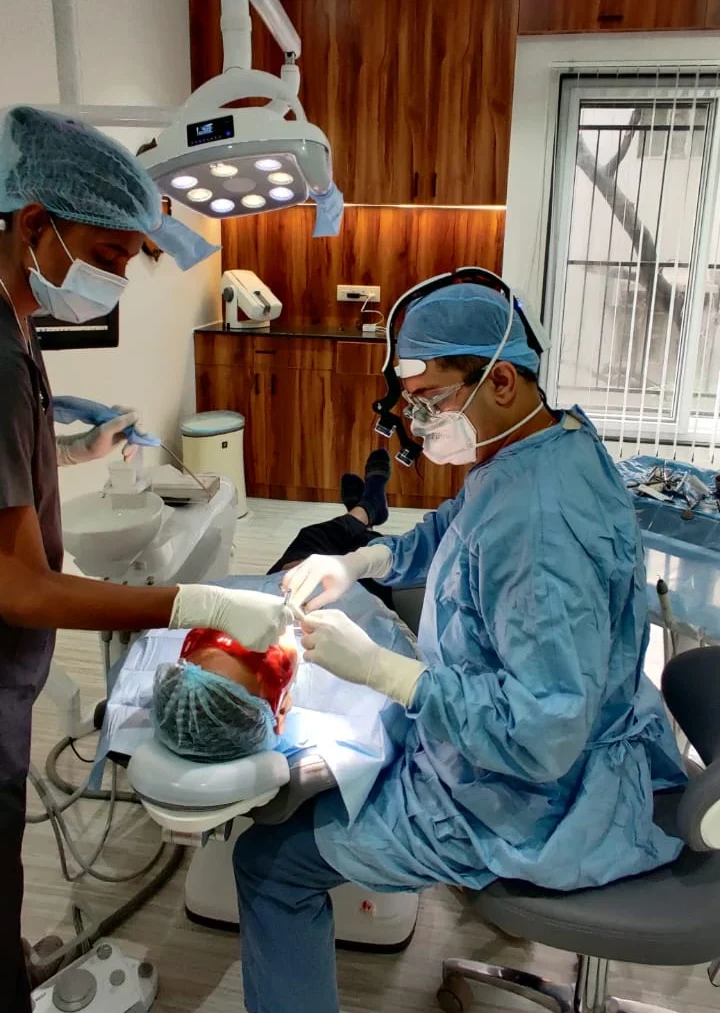
The visit is quick: the tooth surface is examined, cleaned, and dried, the sealant material is applied into the grooves and cured with light, and the bite is checked, typically taking just a few minutes per tooth.
11 Why This Clinic
BDS (Nair Hospital Dental College, Mumbai) · Postgraduate periodontology training, University of North Carolina at Chapel Hill, USA · Diplomate, American Board of Periodontology (2008) · ITI Fellow, International Team for Implantology (2009)
A quick preventive treatment like sealants is still reviewed within a full periodontal health check, standard practice for Dr. Neel, Pune's only US Board Certified Periodontist and Implantologist and one of only two in India.
Sealants are recommended based on groove depth and risk, not applied to every tooth by default.
Wear is monitored over time as part of normal check-ups.
Recommended together where both add complementary protection.
The only dental clinic in Pune listed by the US Consulate Mumbai.
Patients can also read independent reviews on Google and Practo.
12 Visit Us
This dentist and dental clinic in Koregaon Park also treats patients from nearby areas of Pune. See the full Koregaon Park clinic page →
13 International Patients
Clarus Dental Specialities is the only dental clinic in Pune listed by the US Consulate Mumbai, and Dr. Neel holds a dual US-India dental license, giving NRI and overseas patients confidence in the standard of cosmetic dental care available here.
Because the procedure takes only a few minutes per tooth with zero downtime, it's easy to fit into even a short visit to Pune.
14 FAQ
Yes, they're a well-established, widely used preventive treatment with a strong safety record.
Several years with normal wear, they're checked at routine visits and reapplied if needed.
No, the process is painless and doesn't require anesthesia or any removal of tooth structure.
Yes, particularly if their back teeth have naturally deep, cavity-prone grooves.
No, they protect one specific vulnerable area, regular brushing and flossing are still needed everywhere else.
Sealants can wear down or occasionally chip over time, this is checked at routine visits and reapplied as needed.
Yes, they're specifically for the pits and fissures on the chewing surfaces of molars and premolars.
1. Clinical literature on dental sealant effectiveness in caries prevention, indexed on PubMed Central. ncbi.nlm.nih.gov/pmc
2. Dr. Neel Bhatavadekar's peer-reviewed publications, indexed on PubMed. pubmed.ncbi.nlm.nih.gov
Call or WhatsApp the clinic directly to ask questions or set up a cosmetic dentistry consultation with Dr. Neel Bhatavadekar.
This page provides general dental information and does not constitute a diagnosis, treatment plan, or medical advice. Outcomes vary by individual case. No specific results, costs, or timelines are guaranteed. Please consult Dr. Neel Bhatavadekar or a qualified specialist for advice specific to your condition.