
01 Bleeding Gums Treatment
✓ Medically reviewed by Dr. Neel Bhatavadekar, Periodontist & Implantologist
Bleeding gums are most often an early sign of gum disease, but brushing technique, pregnancy, certain medications, and other factors can also be involved. Treatment starts with identifying the actual cause, not just treating the bleeding itself.
At Clarus Dental Specialities in Koregaon Park, bleeding gums are assessed and treated directly by Dr. Neel Bhatavadekar, Pune's only US Board Certified Periodontist and Implantologist.
Patients usually visit us for: bleeding when brushing or flossing gums that look red or swollen bleeding that started recently bleeding despite regular brushing
By calling or messaging, you agree to share your contact details with Clarus Dental Specialities for this enquiry.
Gums bleeding heavily or not stopping? Emergency slots may be available the same day, subject to the clinic's schedule. Call to confirm.
Quick answer: Bleeding gums are most often an early sign of gum disease (gingivitis), but can also result from brushing technique, hormonal changes, certain medications, or other factors. Treatment depends on identifying the specific cause at examination. In Koregaon Park, Pune, this is assessed by Dr. Neel Bhatavadekar, a US Board Certified Periodontist and Implantologist.
Before You Book
But if you want treatment backed by science and done by a US Board Certified Specialist, you're in the right chair.
02 Overview
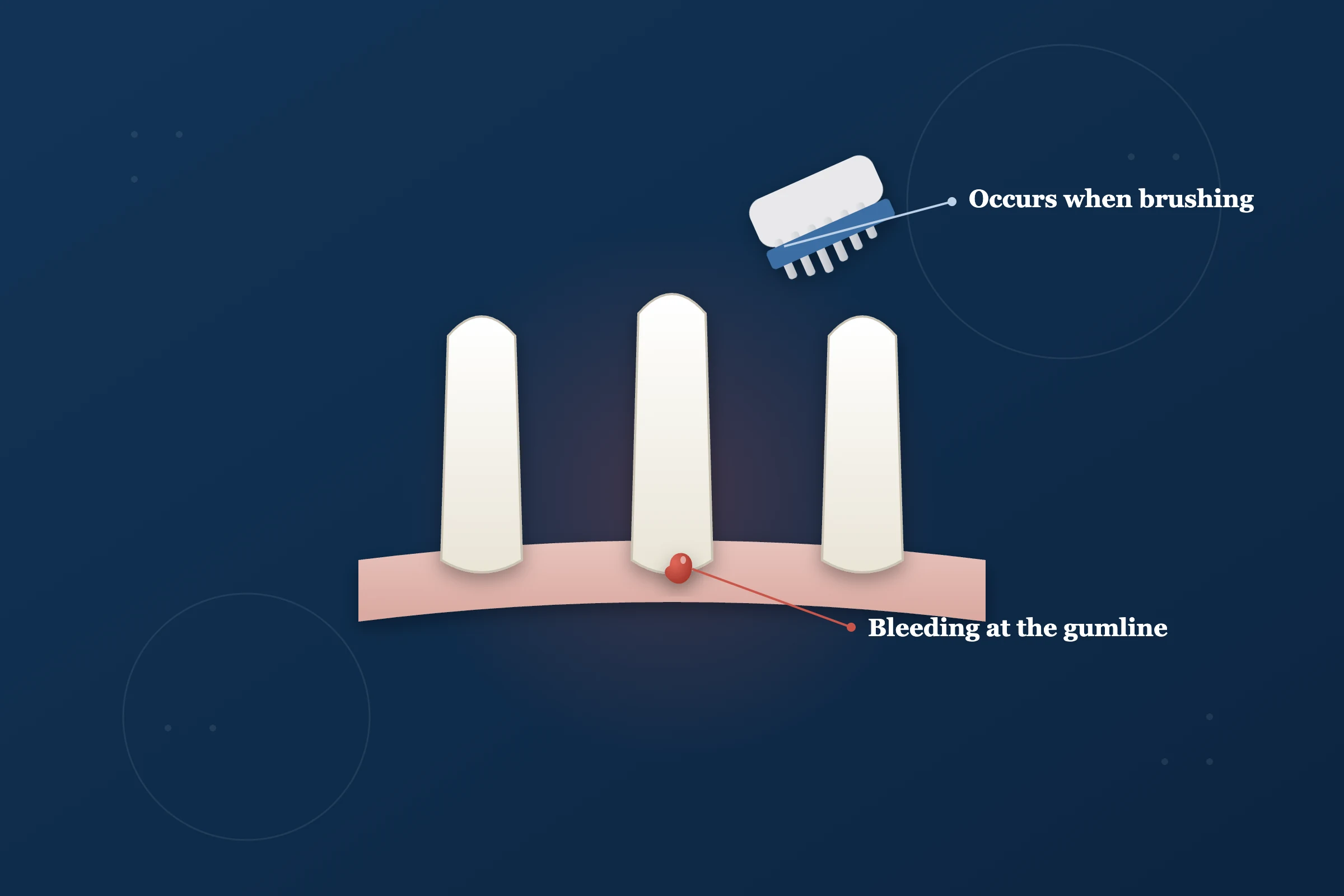
Bleeding when brushing or flossing is most commonly caused by gingivitis, the earliest stage of gum disease, where plaque along the gumline triggers inflammation. This is the single most common cause, but not the only one.
Other contributing factors include brushing too hard or with the wrong technique, hormonal changes during pregnancy, certain medications such as blood thinners, smoking, and uncontrolled diabetes. Occasionally, a single episode of bleeding is simply from minor trauma, like biting into something hard.
Because bleeding is a symptom rather than a diagnosis, treatment is guided by what's actually found at examination, not a generic response to bleeding on its own.
03 Candidacy
Some bleeding warrants a prompt check, while an isolated episode from minor trauma may not.
04 Background
It's common to write off bleeding gums as normal, something that just happens with brushing or flossing. In reality, healthy gums generally don't bleed with normal brushing pressure. Bleeding is one of the earliest, most reliable signs that gum tissue is inflamed.
Catching this early, at the gingivitis stage, is exactly what prevents it from progressing to more advanced gum disease, where bone support can be lost. Normalising the bleeding is what allows it to go unaddressed longer than it should.
05 Options
Treatment follows the cause identified at your examination, not a single default response.
Plaque along the gumline triggers inflammation that bleeds easily. Usually resolves with a professional cleaning and improved home care.
Brushing too hard or with the wrong angle can irritate gum tissue without disease being the main driver.
Certain medications, hormonal changes, and uncontrolled diabetes can make gums more prone to bleeding.
06 Procedure
When the bleeding started, how often it happens, and any recent changes in medication or health are discussed.
Gum tissue is examined and pocket depths are measured to check for underlying gum disease.
The gumline is checked for plaque and tartar buildup that could be driving inflammation.
A routine or deep cleaning is performed if plaque or tartar buildup is contributing to the bleeding.
Specific advice, whether it's technique, home care, or coordinating with your physician, is given based on what was found.
07 Cost Factors
Cost depends entirely on what's found at examination. It's discussed only after assessment, once the following are known:
A specific estimate is only meaningful after examination. This section is informational and is not a quotation.
If you've been told it's "just gingivitis" without much explanation, Dr. Neel is available to give you a clear, specific answer.
08 Aftercare
Bleeding often noticeably reduces once plaque and tartar are removed, or brushing technique is corrected.
Gum tissue typically continues to improve as inflammation settles, especially after a professional cleaning.
If a medical or hormonal factor is involved, monitoring continues alongside the relevant treatment.
Bleeding that doesn't improve prompts a closer look for an underlying cause not yet identified.
09 Limits
Being upfront about the boundaries of dental treatment alone matters here:
10 Your Visit
The first appointment focuses on understanding your specific bleeding pattern and history, followed by an examination to identify the cause. You leave with a clear explanation and a plan matched to what was actually found.
11 Why This Clinic
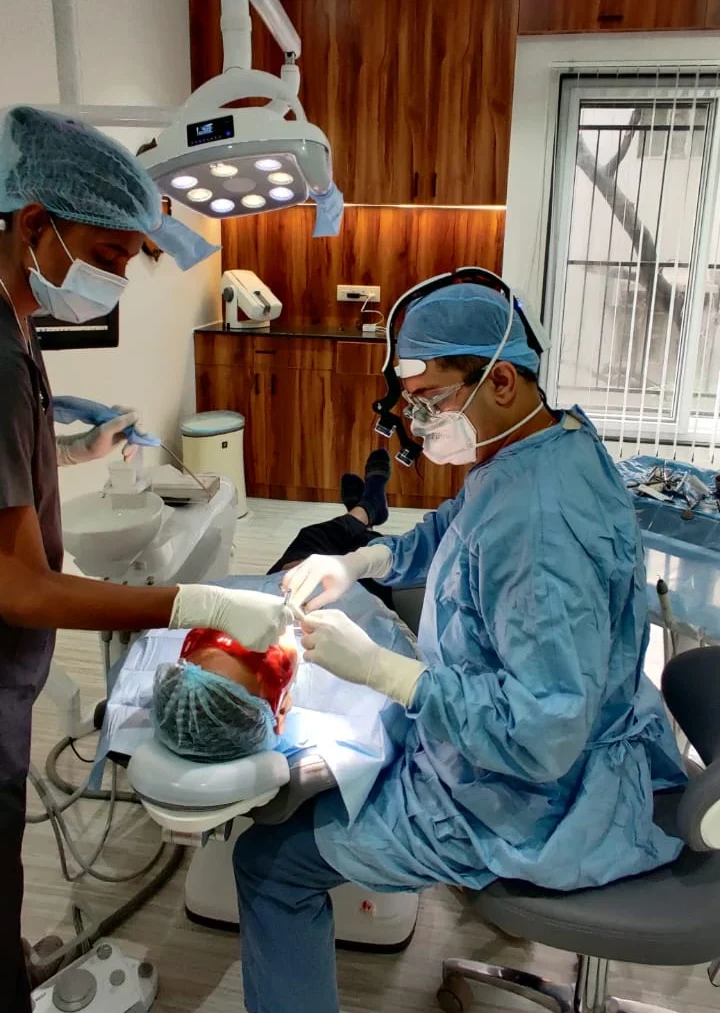
BDS (Nair Hospital Dental College, Mumbai) · Postgraduate periodontology training, University of North Carolina at Chapel Hill, USA · Diplomate, American Board of Periodontology (2008) · ITI Fellow, International Team for Implantology (2009)
Diagnosing why gums bleed takes genuine periodontal training, the kind Dr. Neel brought back to Pune as the city's only US Board Certified Periodontist and Implantologist, and one of only two in India.
Bleeding is investigated properly, not automatically assumed to be gingivitis.
Gum-related symptoms are assessed by a board-certified periodontist.
Medication and systemic causes are handled collaboratively, not ignored.
The only dental clinic in Pune listed by the US Consulate Mumbai.
Patients can also read independent reviews on Google and Practo.
12 Visit Us
This dentist and dental clinic in Koregaon Park also treats patients from nearby areas of Pune. See the full Koregaon Park clinic page →
13 International Patients
Clarus Dental Specialities is the only dental clinic in Pune listed by the US Consulate Mumbai, and Dr. Neel holds a dual US-India dental license, giving NRI and overseas patients confidence in the periodontal assessment available here.
An initial assessment and, where indicated, a professional cleaning can usually be completed within a single visit, making this an easy concern to have looked at during a short trip.
14 FAQ
Most often it's due to plaque buildup along the gumline causing inflammation, known as gingivitis. Brushing technique, medication, and hormonal changes can also contribute.
It's the most common cause, but not the only one. Brushing technique, pregnancy, certain medications, and other factors can also cause bleeding without gum disease being the primary driver.
Yes, aggressive brushing or the wrong technique can irritate gum tissue and cause bleeding even without underlying gum disease. This is corrected with guidance on technique.
No, gentle, thorough brushing should continue. Avoiding the area often allows plaque to build up further, which can make bleeding worse rather than better.
Yes, hormonal changes during pregnancy can make gums more prone to inflammation and bleeding, sometimes called pregnancy gingivitis. It's still worth having checked.
If bleeding is regular, recurring, or accompanied by swelling or tenderness, it's worth an examination rather than waiting to see if it resolves on its own.
Once the cause is addressed, whether through a professional cleaning or a technique correction, bleeding often improves within days to a couple of weeks.
1. Clinical literature on gingival bleeding and its causes, indexed on PubMed Central. ncbi.nlm.nih.gov/pmc
2. Dr. Neel Bhatavadekar's peer-reviewed publications, indexed on PubMed. pubmed.ncbi.nlm.nih.gov
Call or WhatsApp the clinic directly to ask questions or set up an assessment with Dr. Neel Bhatavadekar.
This page provides general dental information and does not constitute a diagnosis, treatment plan, or medical advice. Outcomes vary by individual case. No specific results, costs, or timelines are guaranteed. Please consult Dr. Neel Bhatavadekar or a qualified specialist for advice specific to your condition.