
01 Bad Breath
✓ Medically reviewed by Dr. Neel Bhatavadekar, Periodontist & Implantologist
Persistent bad breath that doesn't go away with brushing or mints is usually coming from somewhere mouthwash can't reach, most often the back of the tongue or, more significantly, from gum disease.
At Clarus Dental Specialities in Koregaon Park, persistent bad breath is planned and delivered directly by Dr. Neel Bhatavadekar, Pune's only US Board Certified Periodontist and Implantologist.
Patients usually choose this for: breath that lingers despite brushing morning breath that doesn't improve a bad taste alongside the odor concern about recurring bad breath
By calling or messaging, you agree to share your contact details with Clarus Dental Specialities for this enquiry.
Bad breath alongside severe tooth pain or swelling? Call to confirm.
Quick answer: Persistent bad breath, medically called halitosis, most often originates in the mouth itself, from bacteria on the back of the tongue, gum disease, or trapped food debris, rather than from the stomach as many people assume. Because gum disease is such a common and often silent cause, bad breath that doesn't improve with better brushing is genuinely worth a dental evaluation. In Koregaon Park, Pune, bad breath is assessed and treated directly by Dr. Neel Bhatavadekar, a US Board Certified Periodontist and Implantologist.
Before You Book
But if you want treatment backed by science and done by a US Board Certified Specialist, you're in the right chair.
02 Overview
The large majority of persistent bad breath cases, by most estimates, originate in the mouth itself, not the stomach, which is a common misconception. Bacteria break down food particles and produce sulfur compounds with a distinctly unpleasant smell, and this happens most in places that are hardest to clean: the back of the tongue, between teeth, and along the gumline.
Gum disease deserves particular attention here because it's a genuinely common cause of persistent bad breath that people don't always connect to their gums, since gum disease itself is often painless in its early stages.
Dry mouth, certain foods, and tobacco use also contribute, but breath that stays bad despite good brushing and normal hydration is worth a proper look, since it usually means something specific, and treatable, is going on.
03 Urgency
Occasional bad breath after certain foods is normal, persistent bad breath usually isn't.
04 Background
Mints and mouthwash mask odor temporarily, but if the actual source is bacteria coating the back of the tongue or an active gum infection, that source is still producing odor-causing compounds the moment the minty freshness fades.
This is why persistent bad breath that doesn't respond to typical measures is worth thinking of as a symptom rather than an embarrassment to cover up, it's your mouth telling you something specific is happening.
A proper evaluation can distinguish between a few common, very different explanations, tongue-coating bacteria, gum disease, dry mouth, or even a cavity trapping food and bacteria, each of which needs its own specific approach rather than a stronger mint.
05 Causes
These are the most frequent underlying sources of bad breath that doesn't resolve with typical measures.
The back of the tongue harbors bacteria that toothbrushing alone often misses.
Bacteria associated with gum inflammation and infection produce a distinct, persistent odor.
Reduced saliva flow lets odor-causing bacteria accumulate more than usual.
06 Diagnosis
When it's worse, what you've tried, and any related symptoms help narrow the likely cause.
Checking for gum disease, cavities, or other sources of trapped bacteria.
The back of the tongue is assessed as a common, often overlooked source.
A specific explanation is identified rather than a generic "practice better hygiene" response.
Treatment might include a deep cleaning, tongue-cleaning guidance, or addressing dry mouth specifically.
07 Cost Factors
Cost depends on individual case factors and is discussed only after examination, once the following are known:
A specific estimate is only meaningful after a clinical evaluation. This section is informational and is not a quotation.
If persistent bad breath hasn't improved despite trying various products, Dr. Neel is available to look for a cause those products aren't addressing.
08 Self-Care
Gently brushing or scraping the back of the tongue removes a major, often-missed source of odor.
Trapped food between teeth is a common contributor that brushing alone misses.
Adequate water intake helps maintain saliva flow, which naturally clears bacteria.
Tobacco use is a significant, direct contributor to persistent bad breath.
09 Self-Care Limits
Being upfront about the trade-offs matters:
10 Your Visit
Your visit includes a discussion of your specific pattern and history, an examination of your gums, teeth, and tongue, and a clear explanation of the likely source, followed by a plan to address it directly.
11 Why This Clinic
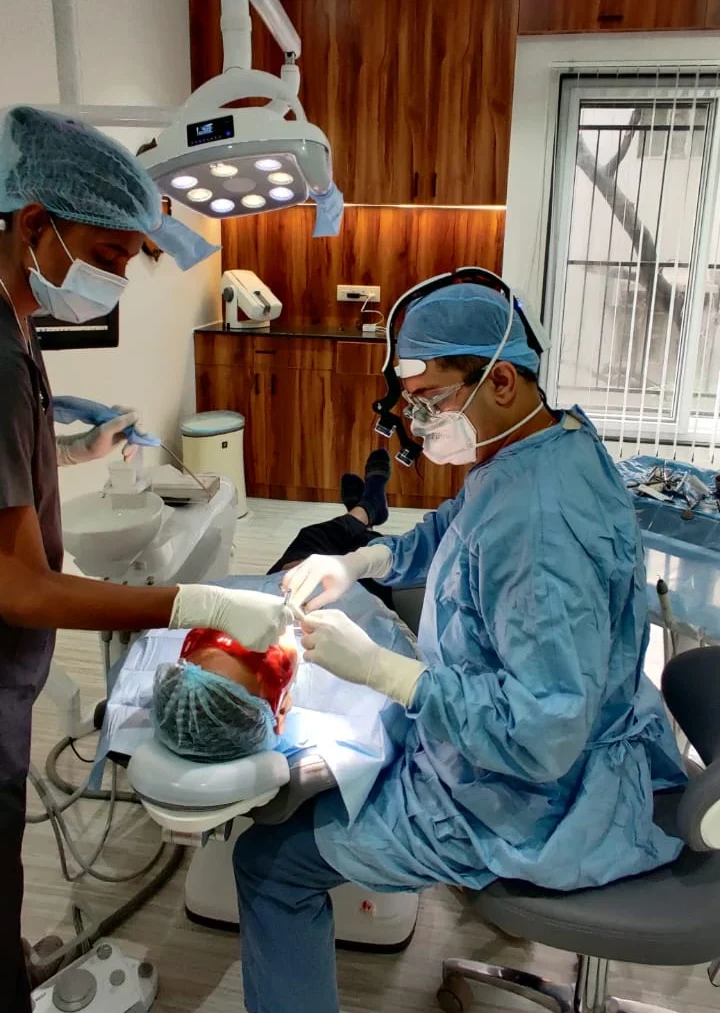
BDS (Nair Hospital Dental College, Mumbai) · Postgraduate periodontology training, University of North Carolina at Chapel Hill, USA · Diplomate, American Board of Periodontology (2008) · ITI Fellow, International Team for Implantology (2009)
Because gum disease is such a common, often-overlooked source of persistent bad breath, having Pune's only US Board Certified Periodontist and Implantologist, and one of only two in India, involved in the evaluation matters.
A leading, often-missed cause is properly ruled in or out.
Not assumed, checked directly as a common source.
You're shown exactly what to do differently, tailored to your actual cause.
The only dental clinic in Pune listed by the US Consulate Mumbai.
Patients can also read independent reviews on Google and Practo.
12 Visit Us
This dentist and dental clinic in Koregaon Park also treats patients from nearby areas of Pune. See the full Koregaon Park clinic page →
13 International Patients
Clarus Dental Specialities is the only dental clinic in Pune listed by the US Consulate Mumbai, and Dr. Neel holds a dual US-India dental license, giving NRI and overseas patients confidence in the standard of cosmetic dental care available here.
A dental evaluation can identify the source of persistent bad breath in a single visit, worth doing during your trip to Pune rather than living with uncertainty about the cause.
14 FAQ
No, most persistent bad breath actually originates in the mouth, most commonly from the tongue or gum disease.
Mouthwash masks odor temporarily but doesn't address bacteria on the tongue or an underlying cause like gum disease.
Yes, it's one of the most common causes, and often the breath improves noticeably once the gum disease is treated.
Some morning breath is normal due to reduced saliva overnight, it typically improves after brushing, unlike persistent bad breath.
Yes, significantly, for many people, since bacteria on the back of the tongue is a major, often-overlooked source.
Yes, reduced saliva flow lets odor-causing bacteria accumulate more than usual.
When it persists despite good brushing, flossing, and tongue cleaning, especially alongside gum symptoms.
1. Clinical literature on the oral origins and management of halitosis, indexed on PubMed Central. ncbi.nlm.nih.gov/pmc
2. Dr. Neel Bhatavadekar's peer-reviewed publications, indexed on PubMed. pubmed.ncbi.nlm.nih.gov
Call or WhatsApp the clinic directly to ask questions or set up a cosmetic dentistry consultation with Dr. Neel Bhatavadekar.
This page provides general dental information and does not constitute a diagnosis, treatment plan, or medical advice. Outcomes vary by individual case. No specific results, costs, or timelines are guaranteed. Please consult Dr. Neel Bhatavadekar or a qualified specialist for advice specific to your condition.