
Bleeding gums during pregnancy can be surprising and concerning. Many expectant mothers notice gum bleeding while brushing or flossing, even if they never had dental issues before. In most cases, this happens due to normal hormonal changes—but it’s still important to understand when bleeding is expected and when it needs professional care
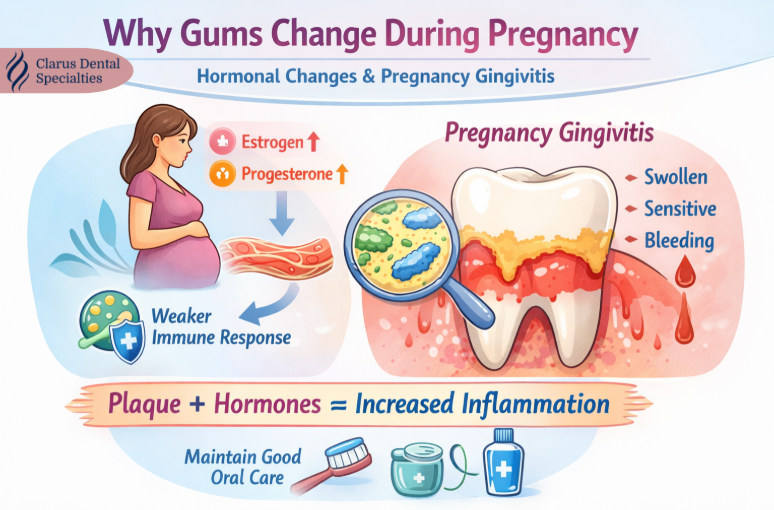
Pregnancy triggers natural increases in the hormones estrogen and progesterone. These hormones increase blood flow to gum tissue and can change how the immune system responds to dental plaque (the sticky film of bacteria on teeth). As a result, gums may become more sensitive, swollen, or prone to bleeding—a condition often called pregnancy gingivitis.
Hormones don’t cause gum disease by themselves, but they can magnify gum inflammation when plaque is present. That’s why excellent daily oral care and timely periodontics and gum care are especially important during pregnancy.
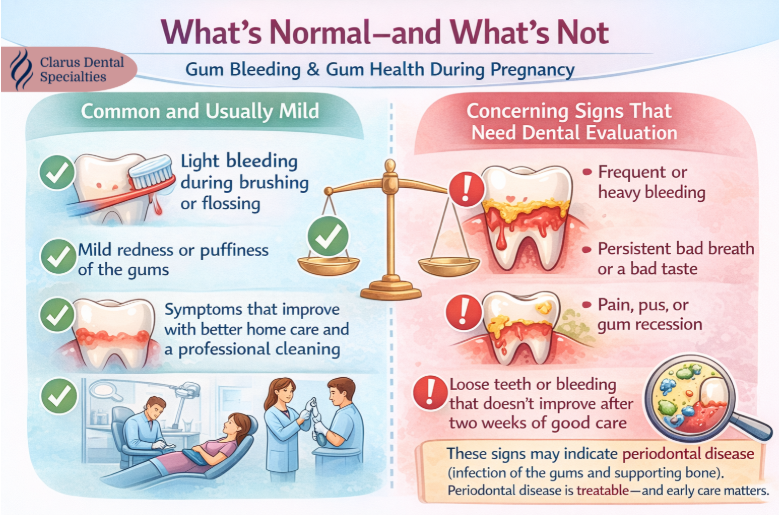
Some gum bleeding during pregnancy can be common, particularly when brushing or flossing. However, not all bleeding should be dismissed.
These symptoms often respond well to improved oral hygiene and general and preventive dentistry visits.
These signs may indicate periodontal disease—an infection of the gums and supporting bone. Periodontal disease is treatable, and early care makes a meaningful difference.
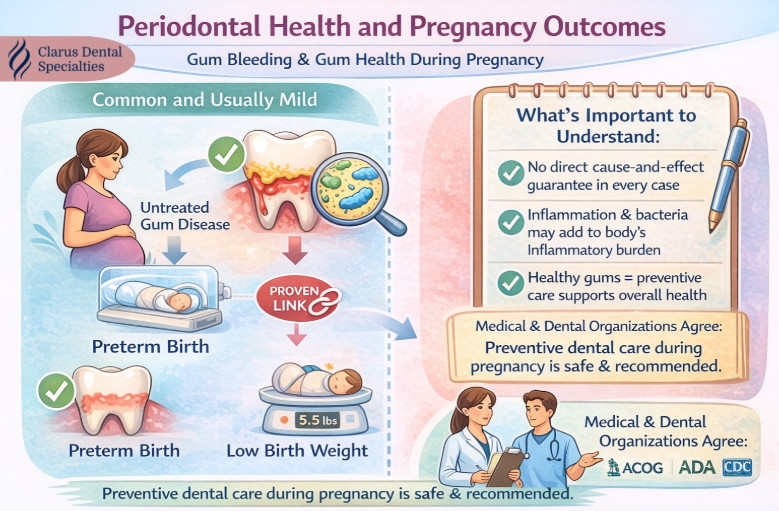
Researchers have studied the relationship between gum disease and pregnancy outcomes for many years. The evidence shows an association (a link) between untreated periodontal disease and outcomes such as preterm birth and low birth weight.
What’s important to understand:
Medical and dental organizations agree that preventive dental care—including periodontal evaluation and treatment—during pregnancy is safe and recommended.
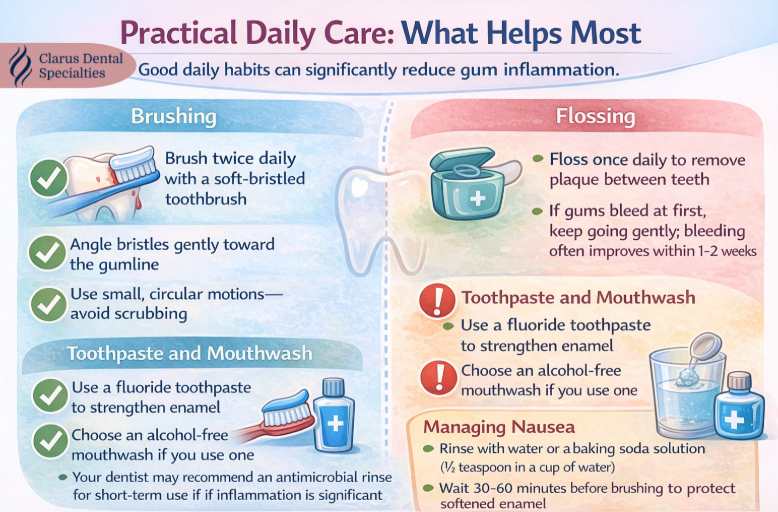
Good daily habits can significantly reduce gum inflammation and discomfort during pregnancy.
If morning sickness occurs:
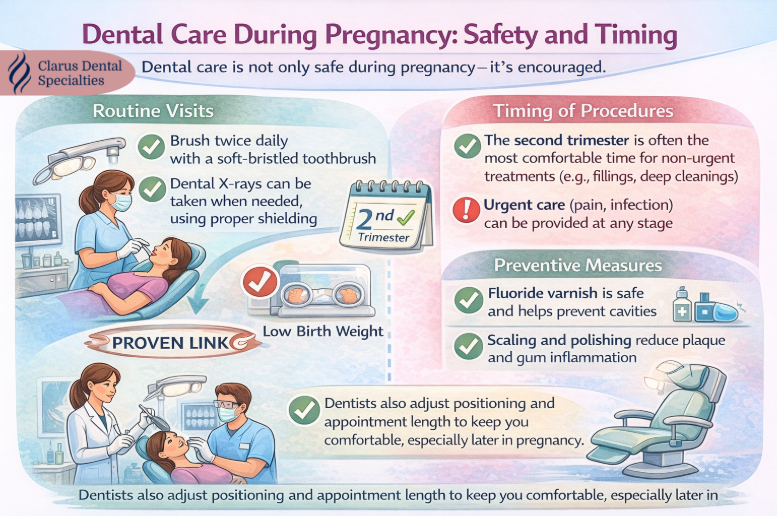
Dental care is not only safe during pregnancy—it’s encouraged.
Exams and professional cleanings are safe throughout pregnancy. Dental X-rays can be taken when needed, using proper shielding, as part of preventive dental care.
The second trimester is often the most comfortable time for non-urgent treatments such as fillings or deep cleanings. Urgent dental care—such as pain or infection—can be provided at any stage of pregnancy.
Fluoride varnish is safe and helps prevent cavities. Scaling and polishing reduce plaque and gum inflammation. Dentists also adjust positioning and appointment length to keep you comfortable, especially later in pregnancy.
Bleeding gums during pregnancy are common—but they are not something to ignore. Hormonal changes may increase sensitivity, but persistent bleeding can signal gum disease that requires professional attention. With good daily care and timely visits for periodontal and preventive dental services, most pregnancy-related gum issues can be safely managed.
If you’re pregnant and experiencing bleeding gums, schedule a consultation with the specialists at Clarus Dental Specialties to receive safe, expert care for your oral health during pregnancy.
WhatsApp us