
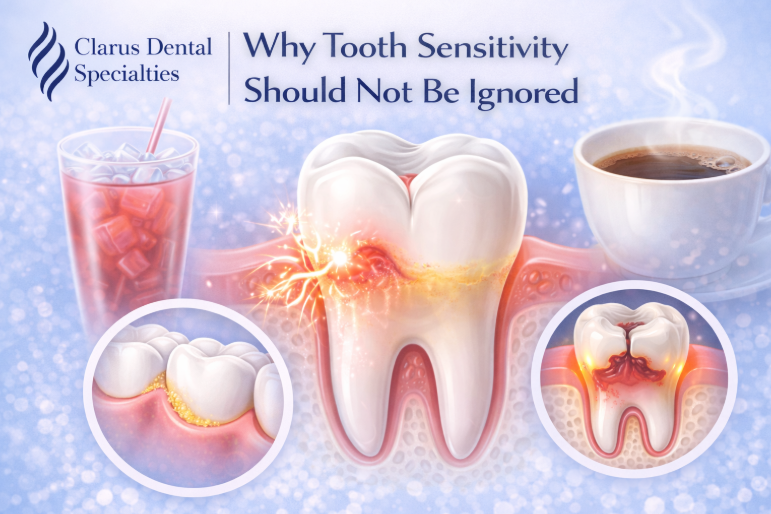
Understanding the causes and how to manage it effectively
Tooth sensitivity is one of the most common dental complaints — yet it is often ignored or self-treated with over-the-counter solutions. A sharp sensation while drinking something cold or hot may seem minor, but it can be an early sign of underlying dental issues.
At Clarus Dental Specialties, we encourage patients to understand the root cause of sensitivity rather than simply masking the symptoms.
What Is Tooth Sensitivity?
Tooth sensitivity occurs when the protective outer layer of the tooth (enamel) wears down or when gums recede, exposing the inner dentin layer.
This can cause discomfort when consuming:
- Hot beverages
- Cold drinks
- Sweet foods
- Sour items
Sensitivity may be temporary, but persistent symptoms require professional evaluation.
Common Causes of Tooth Sensitivity
Tooth sensitivity can result from several factors, including:
1. Enamel Wear
Frequent consumption of acidic foods or aggressive brushing can wear down enamel over time.
2. Gum Recession
When gums recede, the root surface becomes exposed, leading to sensitivity. This is often linked to gum conditions treated under Periodontics & Gum Care.
3. Tooth Decay
Cavities can expose deeper layers of the tooth, causing discomfort. Early detection through General & Preventive Dentistry can prevent progression.
4. Cracked Teeth
Hairline cracks may not always be visible but can cause sensitivity during chewing.
5. Post-Treatment Sensitivity
After certain dental procedures, temporary sensitivity may occur but usually resolves quickly.
When Sensitivity Indicates a Bigger Problem
While mild sensitivity can be manageable, persistent or severe pain may indicate deeper issues such as infection.
Signs to watch for:
- Lingering pain after eating or drinking
- Sensitivity that worsens over time
- Pain while biting
- Swelling around a tooth
Such cases may require treatment under Root Canal & Endodontics to address infection and preserve the tooth.
The Role of Gum Health
Healthy gums play a crucial role in protecting teeth. When gum tissue is compromised, sensitivity increases.
Regular dental visits help:
- Detect gum issues early
- Prevent further recession
- Maintain overall oral stability
Gum care is essential not just for comfort but for long-term tooth support.
How to Manage Tooth Sensitivity
Simple changes can help reduce sensitivity:
- Use a soft-bristled toothbrush
- Avoid aggressive brushing
- Limit acidic foods and beverages
- Use desensitizing toothpaste
- Maintain regular dental check-ups
Professional guidance ensures the right approach based on your specific condition.
Tooth Sensitivity and Dental Restorations
If you have fillings, crowns, or implants, sensitivity may sometimes be linked to how these restorations interact with your bite.
In cases where teeth are missing or heavily damaged, solutions under Dental Implants & Prosthetics may be recommended to restore proper function and comfort.
When Should You See a Dentist?
You should consult a dentist if:
- Sensitivity persists for more than a few days
- Pain becomes sharp or intense
- You notice visible damage to a tooth
- Sensitivity affects your daily routine
You can schedule a consultation through the Reach Us page.
Final Thoughts
Tooth sensitivity is often an early warning sign — not just a minor inconvenience.
At Clarus Dental Specialties, Pune, we focus on identifying the cause behind sensitivity and providing personalized, conservative treatment.
Because treating the cause is always better than masking the symptom.